
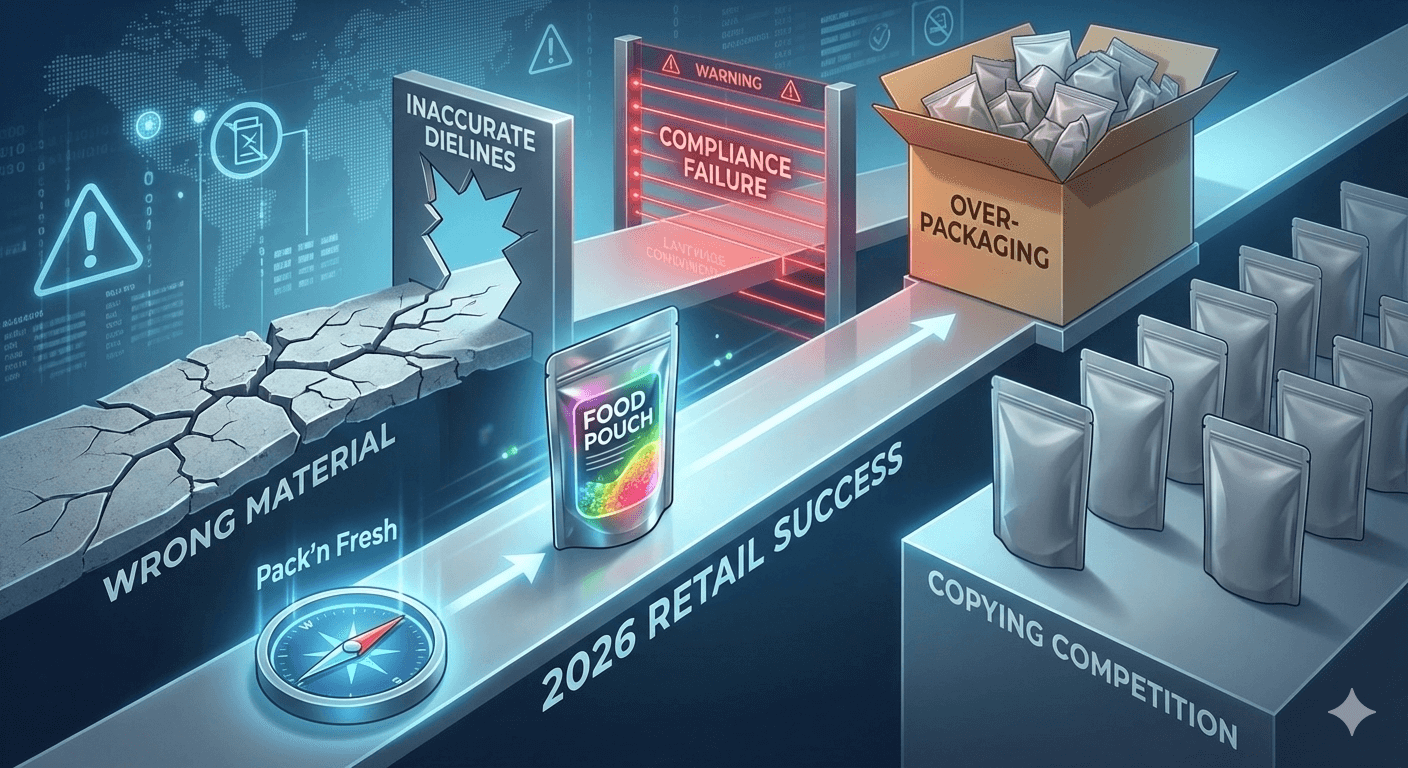
5 Common Food Packaging Mistakes (And How to Avoid Them)
Even the best food product will fail if the packaging isn’t right. As we head into 2026, the stakes for food founders are higher than ever. With new federal transparency laws and shifting consumer expectations around “green” materials, a single oversight can derail months of hard work. Understanding these food packaging mistakes is the first step toward building a resilient, retail-ready brand that survives the first year on the shelf.
After years in the industry, the team at Pack’n Fresh has identified the five most common pitfalls that sink growing brands—and exactly how to steer clear of them to protect your margins.
1. Wrong Material Selection
Using a film that doesn’t provide the right barrier for your specific product is a recipe for disaster. Spices and oils are particularly aggressive; the wrong substrate can lead to “wicking” (oils seeping through the seal) or the loss of essential aromas, causing premature spoilage. Choosing the wrong barrier is one of the most frequent food packaging mistakes we see among early-stage startups.
- Fix: Move toward mono-material high-barrier films. These provide the protection your spices need while ensuring the pouch is fully recyclable, helping you avoid “packaging shame” and rising plastic taxes.
2. Inaccurate Dielines
A dieline is the technical blueprint of your package. If your artwork doesn’t align perfectly with physical trim lines, you risk misaligned barcodes, cut-off nutritional info, or “crease-creep” where graphics disappear into the folds. These technical food packaging mistakes lead to thousands of dollars in wasted inventory.
- Fix: Never use a generic template. Always get a custom dieline from your production partner. At Pack’n Fresh, we ensure your art fits the physical dimensions of our high-speed pouching machinery before a single drop of ink is laid down.
3. Ignoring Compliance and New Labeling Laws
Failing to format allergen declarations clearly is more than a mistake—it’s a massive legal liability. The FDA has expanded its scrutiny on cross-contact and “Healthy” claims. One missing bolded ingredient or a poorly placed “Contains” statement can lead to immediate federal recalls and permanent brand damage. Recalls are the most expensive food packaging mistakes a brand can face.
- Fix: Conduct a regulatory audit. Ensure your Nutritional Facts meet the 2025/2026 uniform compliance dates and that your allergen info is hyper-legible for inclusive accessibility.
4. Over-Packaging: The “Sustainability Killer”
Consumers are hyper-aware of “excess.” Sending a small item in a massive box with plastic “filler” looks wasteful and hurts your brand story. It also costs you more in shipping and potential Extended Producer Responsibility (EPR) fees. Many legacy brands are currently redesigning their lines specifically to fix these types of food packaging mistakes.
- Fix: *Embrace Lightweighting*. Use strength-engineered materials and “right-sized” pouches (we specialize in under 2 lb formats) to minimize your footprint while maintaining premium protection.
5. Copying the Competition
While it’s tempting to mimic the market leader, “shelf sameness” is a death sentence for new brands. If your bag looks exactly like everyone else’s, you aren’t building loyalty—you’re just filling a gap until a cheaper option arrives. Avoiding creative food packaging mistakes is essential for long-term customer retention.
- Fix: Use your packaging to tell a story. Whether it’s through unique textures, custom-shaped pouches, or QR codes that link to your brand’s supply chain transparency, give the consumer a reason to choose you over the generic incumbent.
The Solution: Prototype Early to Avoid Risk
The best way to avoid these food packaging mistakes is to see, feel, and test your packaging before mass production begins. Partnering with an experienced co-packer allows you to “prototype early,” testing physical samples under real-world conditions (like heat, humidity, and transit) to ensure they perform exactly as intended.
Don’t learn these lessons the hard way. Whether you are launching a new snack or scaling a meal kit, our turn-key expertise in food and wellness products acts as your safety net.
- Explore our technical kitting solutions in our Ultimate Guide to Supplement Co-packing.
Schedule a packaging audit with Pack’n Fresh today and secure your launch.