Category

Packaging Solutions

The Meal Kit Executive’s Packaging Solutions: How to Control Costs & Drive Profitability

The Meal Kit Executive's Packaging Solutions

The Meal Kit Executive’s Packaging Solutions: How to Control Costs & Drive Profitability

You lead an established meal kit business that has successfully scaled beyond the startup phase. You have a loyal customer base and a respected brand.

However, growth has introduced massive, complex problems—and they all center on one critical area: Packaging and Logistics.

Your success is no longer about the recipes; it’s about supply chain execution. It’s about how you efficiently and profitably get specialized, shelf-stable components—like high-value spice blends, specialty grains, or finishing sauces—into a single customer box, 1,000 miles away.

If your system is built on outdated, manual, or fragmented logistics, your growth is being capped by runaway costs. This is the definitive guide for operations managers and executives who are ready to transition their current supply chain to a more scalable, professional, and profitable model. We’ll cover the massive drain of the fragmented vendor model, the materials that guarantee margin, and the strategic partnership that unlocks the next phase of profitable growth: Turnkey Meal Kit Co-Packing.

Chapter 1: The Fragmented Supply Chain: Why Juggling Vendors Is Draining Profitability

The current system of sourcing components from 10+ different vendors (blending, packaging, labeling, shipping) is a financial and operational liability. This complexity is not a sign of efficiency; it’s a sign of a fragmented supply chain built on risk.

For an established enterprise, the true cost of this “Vendor Juggle” is immense:

  • Massive Inventory Bloat: Forcing an established company to purchase massive Minimum Order Quantities (MOQs) of raw packaging materials (boxes, film, jars) that tie up critical working capital and require vast, expensive warehouse space.
  • Operational Risk: Relying on multiple handoffs means one delay, one quality control failure, or one miscommunication can halt production across your entire enterprise.
  • No Volume Consolidation: The sheer inefficiency of buying 10 small quantities from 10 different people ensures you never achieve the true economy of scale that your enterprise volume should command.
  • Traceability Liability: An outdated, non-integrated system makes lot-level traceability a manual, complex, and potentially company-ending legal risk during an audit or recall.

Chapter 2: The Strategic Solution: How Turnkey Co-Packing Unlocks True Scalability

A turnkey co-packer is a single partner that manages the entire packaging and kitting process for you—from sourcing raw ingredients to blending your proprietary mixes, to packaging them into pouches, and handing them off to your final fulfillment house.

This transition is the most impactful decision an established business can make to simplify its operations and immediately improve its margin.

Operational Function The Old, Fragmented Way The New Turnkey Way
Vendor Management 10+ partners (Blender, Pouch Supplier, Kitter, Shipper) 1 Strategic Partner (Your Co-Packer)
Inventory Risk High. Capital tied up in packaging MOQs and storage. Low. Co-packer manages material sourcing and just-in-time delivery.
Traceability Messy paper trails, high legal/audit risk. Digital, lot-level tracking (ERP) in a single system.
Executive Focus Managing Logistics and QC Headaches Driving Brand Growth and Marketing Strategy

Chapter 3: The Ultimate Packaging Format: Why Pouches Won

Your packaging is your customer’s first physical experience with your brand. The reliance on rigid plastic tubs and heavy jars is now a significant cost center.

The clear winner for stable, non-perishable ingredients—especially your high-value spice blends, specialty grains, coffee, and finishing sauces—is the flexible, small-format pouch (stand-up, pillow, and stick packs).

The Pouch Advantage for Established Enterprises:

  • It Slashes Your Shipping Costs (DIM Weight):
    • Pouches are lightweight and form-fitting. They allow you to use a significantly smaller final shipping box.
    • This directly and immediately reduces your “Dimensional Weight (DIM)” freight charges—a cost that can make or break the profitability of high-volume shipments.
  • It Elevates Your Premium Brand:
    • The modern, flat, custom-printed pouch is a vibrant, full-color “mini-billboard” that wins at the point of sale (or in the unboxing experience). A small label on an opaque tub cannot compete with the brand presence of a full-surface printed pouch.
  • It Simplifies Kitting:
    • Pouches are easy to handle, stack efficiently, and reduce breakage compared to rigid containers, leading to faster, more accurate kitting and a better customer experience.

Chapter 4: The Professional Edge: Integrated Systems and Compliance

Scaling successfully means adopting best-in-class operational professionalism. This relies on an integrated, modern approach to food safety and logistics.

The ERP System: Your Traceability Insurance

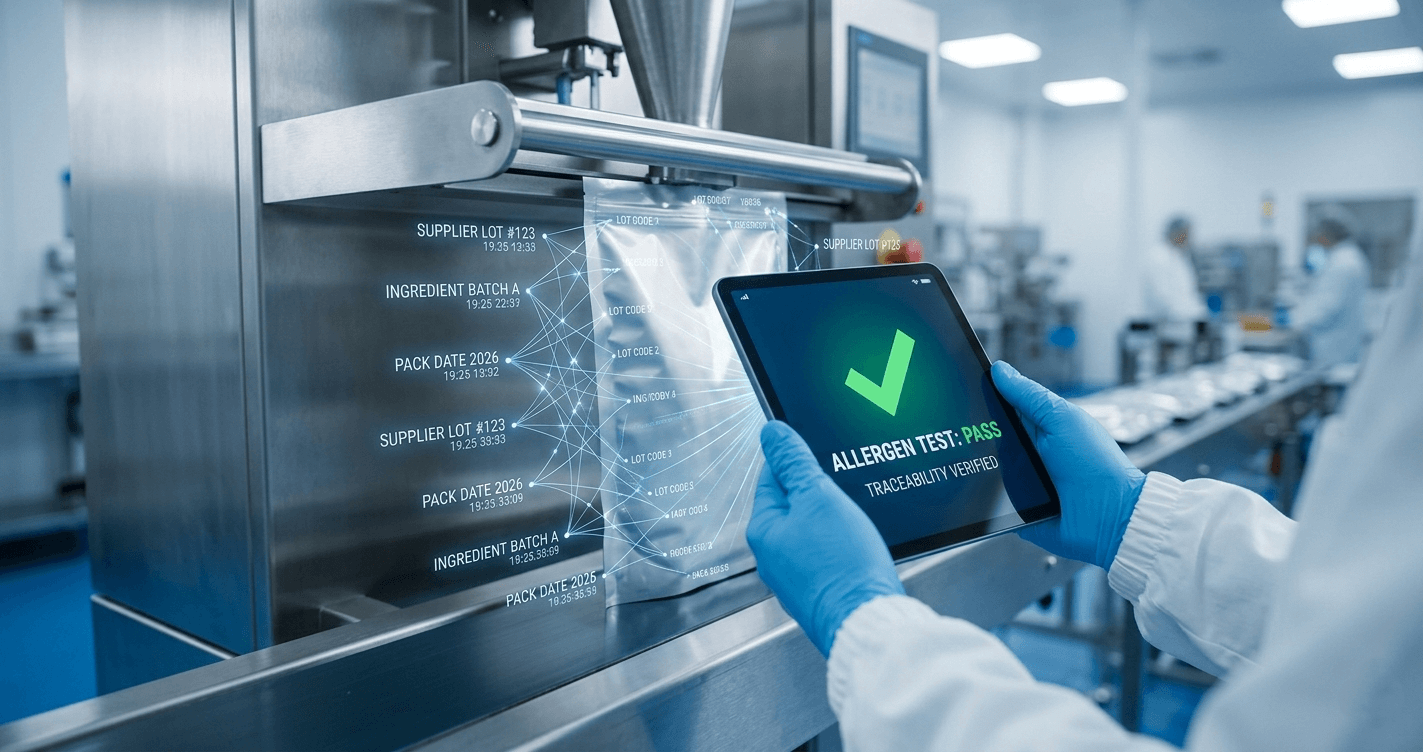
An Enterprise Resource Planning (ERP) system digitally tracks every single ingredient from the moment it enters the facility to the moment it leaves in a customer’s kit.

  • Compliance: This is your best and fastest defense against an FDA audit or a product recall.
  • Efficiency: It ensures accurate, real-time inventory management, which is essential for managing your complex supply chain and preventing out-of-stocks.

A professional co-packer doesn’t just use an ERP system; they integrate their lot codes and inventory reporting directly with your systems, providing a single source of truth for your entire operation.

Chapter 5: How to Choose Your Strategic Meal Kit Co-Packer

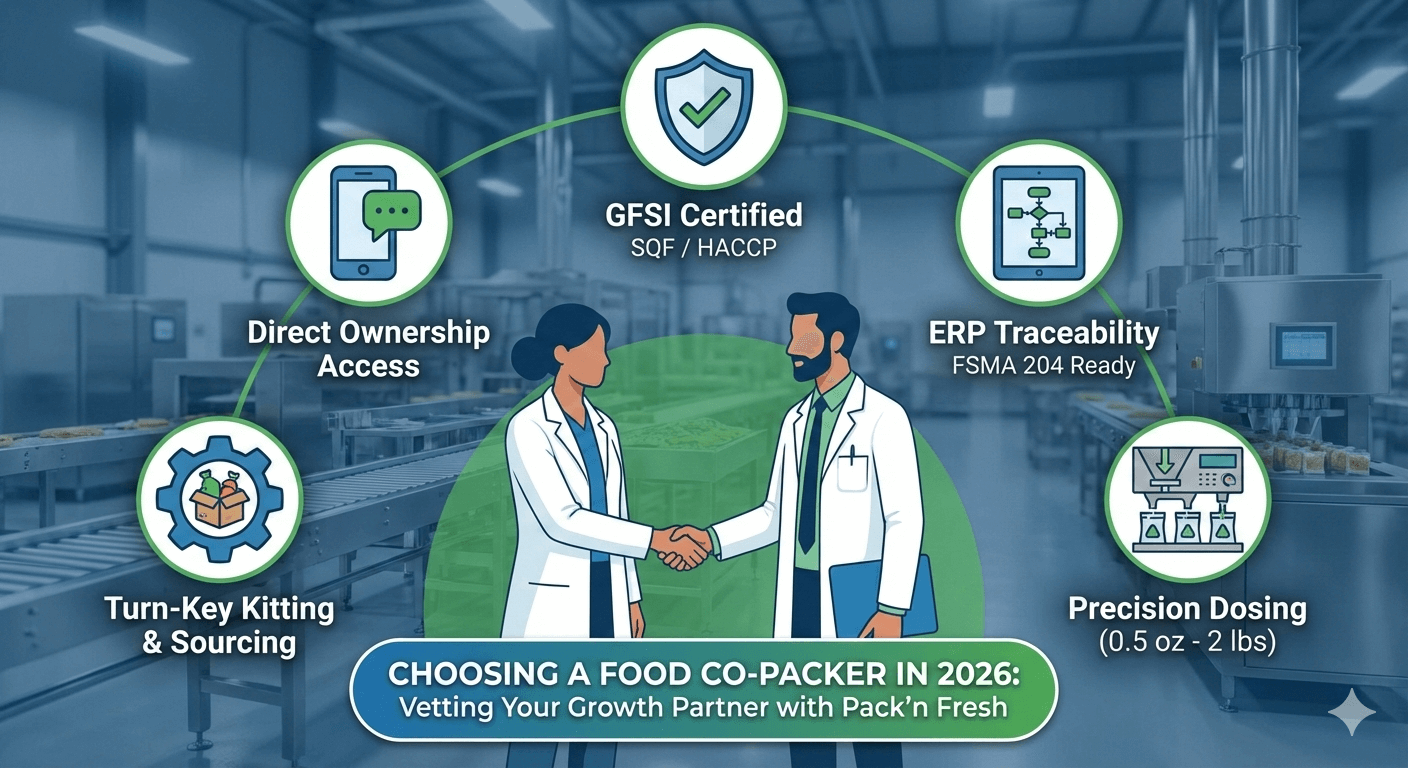
When you are already an established brand, the decision is not if you need a co-packer, but which partner is sophisticated enough to handle your scale and complexity.

  • Ask About Specialization: Does their facility match your needs? They should specialize in high-SKU meal kit kitting, small-format (< 2lb) pouches and kits of shelf-stable components.
  • Ask About Blending: If you have proprietary spice or powder blends, your co-packer should have in-house blending capabilities. Managing two separate partners (a blender and a packager) re-creates the “DIY Trap.”
  • Ask About Food Science: Are they just machine operators, or are they food scientists and quality control experts? Their team should be able to consult on material integrity and shelf life.
  • Ask About Equipment Flexibility: Do they have a range of equipment that allows them to scale with you, or are they limited to one machine that requires massive MOQs?

Your Next Step: From Complex Operations to Streamlined Profitability

The right turnkey co-packing partner provides the integrated systems, expertise, and operational structure that frees your enterprise from the inefficiencies of the fragmented supply chain. It’s the moment your logistics stop being a bottleneck and start being a competitive advantage.

About Pack’n Fresh, Pack’n Fresh is the expert turnkey co-packing partner for scaling food brands. We specialize in the exact needs of the established meal kit industry: high-SKU, small-format (< 2lb) pouches, in-house blending, and complex kitting, all backed by a food-science-led team and a state-of-the-art ERP system.

Stop managing logistics. Start driving profitability. Contact us today for a strategic consultation.

The Modern Snack & Spice Brand’s Playbook: How to Win at Retail with Pouch Packaging

Packnfresh - Pouch Packaging

The Modern Snack & Spice Brand’s Playbook: How to Win at Retail with Pouch Packaging

You’re a modern food founder. You’ve created a unique snack mix, an artisanal spice blend, or a new superfood granola. Your product is amazing, your branding is on point, and you’re ready to go from the farmer’s market to the retail shelf.

Now you’re facing the single biggest hurdle: “pouch packaging”.

The old-world model of glass jars (for spices) or flimsy bags-in-boxes (for snacks) is dead. It’s expensive, heavy, breaks easily, and has zero “pop” on a crowded shelf.

To win in modern retail, your pouch packaging has to be your *#1 salesperson*. It needs to be premium, cost-effective, and functional. This is why the stand up pouch packaging has become the undisputed champion for snack and spice brands.

This is your playbook for using pouch packaging to scale your brand and win at retail.

Chapter 1: Why Pouches Won: The Retail Shelf Takedown

Walk down the snack or spice aisle. The most successful, fastest-growing brands have all moved to pouches. This is not a coincidence. It’s a strategic takedown of older, inefficient formats.

The Pouch vs. The Glass Jar (for Spices)

  • Shipping: Glass is heavy and fragile. You pay a fortune in freight and shrink (breakage). Pouches are lightweight and unbreakable, slashing shipping costs.
  • Branding: A jar gives you a tiny, 2×3-inch label. A pouch gives you a 360-degree, full-color brand canvas that stands up and acts like a mini-billboard.
  • Freshness: A glass jar doesn’t protect from UV light, which rapidly degrades the color and potency of spices. A high-barrier, opaque pouch is a “vault” that protects your product from light and oxygen.

The Pouch vs. The “Bag-in-Box” (for Snacks/Granola)

  • Customer Experience: The bag-in-box is the most hated format. The inner bag is impossible to reseal, the box gets crushed, and the product goes stale in days. A pouch with a resealable zipper is a premium experience that customers love.
  • Shelf Presence: A box looks dated. A custom-printed pouch looks modern, healthy, and premium, allowing you to justify a higher price point.
  • Cost: A bag-in-box is two packaging components (bag + box), which means more material and more complex assembly. A pouch is a single, efficient, all-in-one solution.

(Deep Dive: How to Package Snacks for Retail: A Startup’s Guide to Pouches)

(Deep Dive: Flexible Food Packaging vs. Rigid: A Cost-Benefit Analysis)

Chapter 2: The Turnkey Co-Packing Advantage

You’re convinced. You need pouches. Now, how do you get them?

  • The DIY Trap: You try to source your nuts from one vendor, your spices from another, your pouch film from a third, and find a “co-packer” to assemble it all. This is a logistical nightmare.
  • The Turnkey Solution: You partner with a turnkey co-packer. This is a single, expert partner who manages the entire process for you.

At Pack’n Fresh, our turnkey model for a snack/spice brand looks like this:

  • Consultation: We start with your recipe. Our food science team recommends the perfect high-barrier film and active packaging (see Chapter 3) to guarantee freshness.
  • Sourcing & Blending: We source all your raw ingredients (nuts, spices, seeds, etc.) and use our in-house, commercial-scale blenders to perfectly create your 5-star recipe, every time.
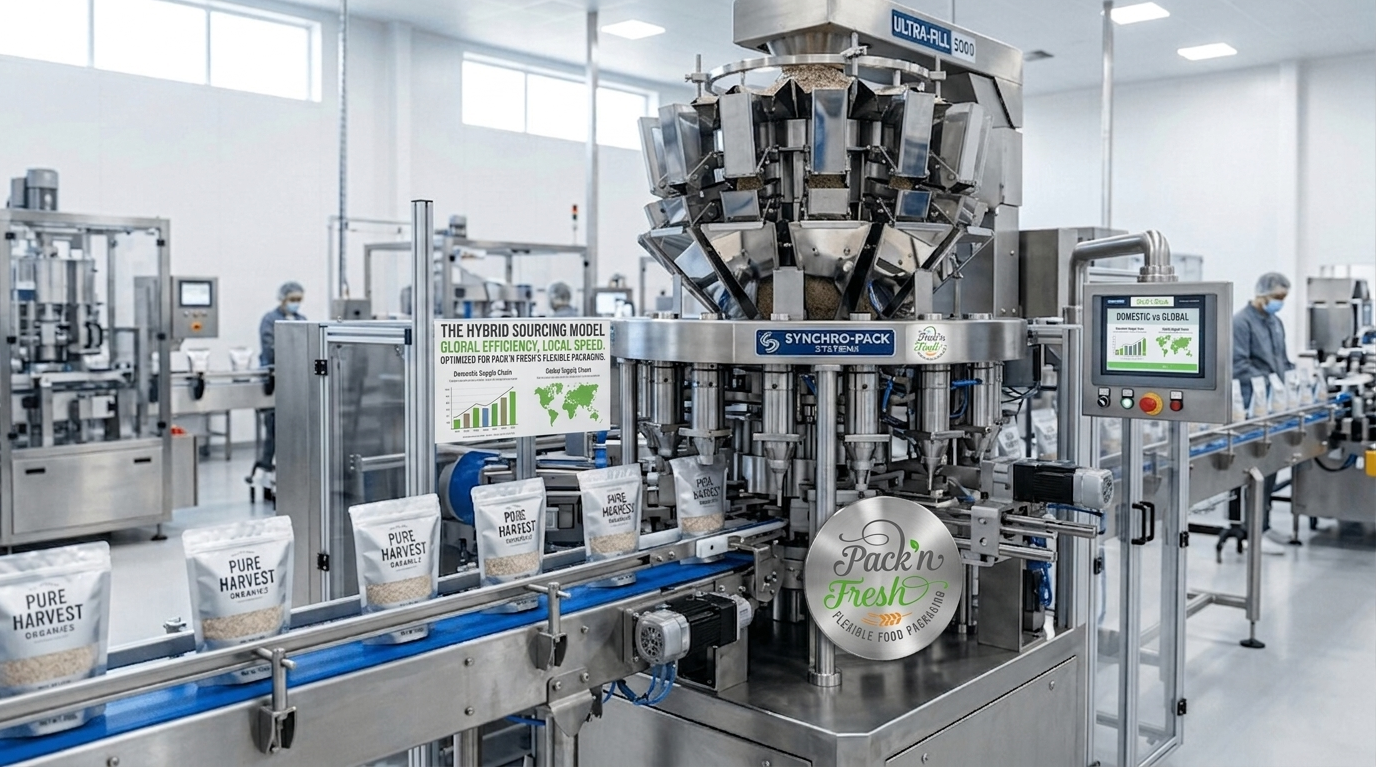
  • High-Speed Packing: Your blend is moved directly to our state-of-the-art pouching lines, where it is automatically portioned, gas-flushed, and sealed.

You manage one partner. You get one invoice. And you get your time back to focus on sales and marketing.

(Deep Dive: What is Turnkey Co-Packing? A Simple Explanation for Food Brands)

Chapter 3: The Science of “Crunch”: Protecting Your Product

For a snack or spice brand, freshness is everything. “Stale” is a brand-killer. This is where your co-packer’s expertise in food science becomes your critical advantage.

We build a “packaging system” to defend your product’s specific texture and flavor.

For Snacks (Nuts, Granola, Mixes)

  • The Enemy: Oxygen. Oxygen oxidizes the fats in nuts, making them taste rancid and stale in a matter of weeks.
  • The Solution: Oxygen Absorbers. We insert a small “scavenger” packet into each pouch before sealing. It actively absorbs 99.9% of the oxygen, stopping the oxidation process cold. This can extend your snack’s shelf life from 3 months to 12 months.

For Spices (Blends, Rubs)

  • The Enemy: Moisture & UV Light. Moisture makes your blend “clump” into a solid brick. UV light from a store shelf bleaches the color and degrades the flavor.
  • The Solution: **Desiccants & Opaque Film**. We use a high-barrier, opaque pouch to block 100% of UV light. Then, we add a “desiccant” packet to absorb all moisture, keeping your blend powdery and fresh.

This is the science that retailers and customers respect. It’s the difference between an amateur product and a professional one.

(Deep Dive: What is Active Packaging? A Practical Guide to Extending Shelf Life)

Chapter 4: How to Choose Turnkey Snack and Spice Co-Packer

You’re looking for a partner to grow with. The wrong co-packer will trap you with massive MOQs (Minimum Order Quantities) or won’t have the right equipment.

You need a flexible specialist. Ask these questions:

  • What is your specialization? A co-packer who handles giant 50lb bags of flour is the wrong choice. You need to hear: “We specialize in high-SKU, small-format (< 2lb) pouches for high-growth brands.” This is our entire focus at Pack’n Fresh.
  • Do you have in-house blending? This is non-negotiable. If they can’t blend your recipe and pack it in the same facility, they aren’t a true turnkey partner.
  • What is your equipment portfolio? If they only have one giant machine, you’ll face massive MOQs. You want to hear: “We have an extensive equipment portfolio.” This is the key to flexible MOQs. It means they have the right-sized machine for your pilot run and your 500,000-unit retail order.
  • How do you ensure quality? Look for two things: a **food-science background** and an ERP system for digital lot-level traceability. This is your proof of professionalism.

(Deep Dive: 3 Signs You’ve Outgrown Your Commercial Kitchen)

Your Next Step: From Kitchen Table to Retail Shelf

You’ve created an amazing product. Don’t let your pouch packaging be the bottleneck that stops you from scaling.

The move to a turnkey pouch system is the most important investment you can make in your brand’s future. It cuts costs, elevates your brand, and delivers the “wow” experience that gets you off the shelf and into the customer’s cart.

Pack’n Fresh is the expert partner for snack and spice founders. We provide the turnkey sourcing, in-house blending, and food-science expertise to move your brand into the major leagues.

Ready to look like a national brand? Contact us for a consultation today.

The Ultimate Guide to Supplement Co-Packing: From Powders to Pouches

Packnfresh - Supplement Co-Packing

The Ultimate Guide to Supplement Co-Packing: From Powders to Pouches

You’re a supplement brand founder. You’ve spent months, maybe years, perfecting your formulation. You have a product that delivers real results, and you’ve built a brand that customers are starting to trust.

But now you’re facing a problem that has nothing to do with your formula. It’s a logistics and cost problem.

The heavy, rigid plastic tubs you’re using are a bottleneck. They are expensive to buy, expensive to store, and astronomically expensive to ship in an e-commerce and subscription-box world. You’re competing in a crowded market where brand matters, but your “brand” is a small sticker on a generic white tub.

This is the guide for supplement founders who are ready to switch to a smarter, more profitable, and more premium packaging format. We’ll explore why flexible pouches are the future of the industry and how to find a supplement packaging manufacturers to help you make the switch.

Chapter 1: The “Tub Tax”: How Rigid Bottles Are Draining Your Margin

For decades, the rigid plastic tub or “bottle” was the default for protein, collagen, and vitamin powders. In a brick-and-mortar retail world, this made some sense. But in a modern, direct-to-consumer (DTC) model, it’s a financial drain.

We call this the “Tub Tax”—a series of hidden costs you’re paying at every step:

  • You Pay to Ship Air: Tubs are mostly empty air, and they don’t collapse. In an e-commerce world ruled by Dimensional Weight (DIM), you are paying carriers to ship that empty space.
  • You Pay to Store Air: A single pallet of empty tubs takes up a massive amount of expensive warehouse space.
  • You Pay for Inefficiency: Tubs are heavy, prone to cracking, and have high material costs compared to their lightweight counterparts.
  • You Pay with Your Brand: Your branding is limited to a small, applied label. You look like everyone else on the shelf.

This is why you see the most innovative, fastest-growing supplement brands making a universal switch.

Chapter 2: The Pouch Revolution: The #1 Format for Modern Brands

The future of supplement packaging is the flexible, small-format (< 2lb) stand-up pouch.

This isn’t just a trend; it’s a strategic move to a superior format. For a direct-to-consumer brand, pouches solve every problem that tubs create.

  • They Slash Shipping & Storage Costs: A lightweight, form-fitting pouch is the perfect e-commerce package. It’s 70%+ lighter, takes up less space in a subscription box, and drastically cuts your DIM weight shipping costs. One pallet of flat pouches holds the equivalent of 15-20 pallets of empty tubs.
  • They Are a Premium Brand Canvas: The entire pouch is your “billboard.” You get edge-to-edge, stunning, full-color printing. A pouch looks and feels premium, allowing you to stand out in a sea of generic tubs.
  • They Offer a Better Customer Experience: Pouches are portable (gym bags, travel), resealable, and create less plastic waste. This aligns perfectly with the values of a health-conscious consumer.
  • They Unlock New Markets: Pouches allow for two key formats:
    • Bulk Pouches (1-2 lb): The new standard for your core protein/collagen product.
    • Single-Serve “Stick Packs”: The ultimate tool for trial, travel, and subscription box “samplers.”

(Deep Dive: Custom Vitamin Packaging: Why Pouches Beat Bottles)

(Deep Dive: Finding a Low-MOQ Supplement Co-Packer)

Chapter 3: The Science of Supplement Packaging (Protecting Your Formula)

Your #1 asset is your formula. Your packaging’s primary job is to protect its potency and freshness from its two greatest enemies: moisture and oxygen.

This is where your co-packer’s food science expertise is non-negotiable.

1. The Moisture Menace (Clumping)

Powders (especially those with botanicals or vitamins) are hygroscopic—they love to absorb moisture from the air. This causes clumping, ruins mixability, and can degrade the product.

  • The Solution: A high-barrier pouch film is your first defense. The second is a desiccant (a moisture-absorbing packet) inserted into the pouch by your co-packer. This “pulls” all residual moisture from the pouch, keeping your powder perfectly dry.

2. The Oxygen Problem (Degradation)

Oxygen is the enemy of freshness. It oxidizes fats (going rancid) and rapidly degrades the potency of sensitive ingredients like vitamins (Vitamin C, E) and Omega-3s.

  • The Solution: An oxygen scavenger (or “absorber”). This is a small packet that we insert into the pouch, which then absorbs 99.9% of the destructive oxygen, “locking in” freshness and protecting the potency of your formula for its entire shelf life.

(Deep Dive: What is Active Packaging? A Practical Guide)

Chapter 4: The Compliance & Safety Mandate (Your ERP “Defense”)

The supplement industry is governed by strict FDA regulations (cGMP). You are legally responsible for the safety and traceability of your product, and “I don’t know” is not an answer.

This is why your co-packer’s internal software is critical.

  • DIY Risk: Trying to track ingredient lots across your supplier, your blender, and your packager via spreadsheets is a massive compliance risk.
  • The Professional Solution: A true co-packing partner, like Pack’n Fresh, runs on a single ERP (Enterprise Resource Planning) system. This provides a digital, lot-level “chain of custody” from the moment a raw ingredient arrives to the moment your finished pouch ships. In the event of an audit or recall, you have an instant, professional report.

(Deep Dive: Why Your Co-Packer’s ERP System is Your Best Defense)

Chapter 5: How to Choose Your Supplement Co-Packer

You’re ready to move to pouches. Now you must choose a partner. Be careful: the co-packer who fills 50lb bags of flour is the wrong partner for your high-value, 1lb pouch of protein.

You need a specialist. Ask these questions:

  • What is your specialization? You want to hear: “We specialize in small-format (< 2lb) pouches and turnkey co-packing.” This is our exact focus at Pack’n Fresh.
  • What is your background? You want to hear: “Our co-founders come from food science and quality control.” This proves they are experts in product safety, not just machine operators.
  • What is your equipment portfolio? You want to hear: “We have an extensive portfolio of equipment.” This is the key to flexible MOQs. It means they have the right-sized machine for your brand, whether you’re at 5,000 units or 500,000.
  • Do you offer turnkey services? The answer must be “Yes.” A partner who can source your ingredients, blend your formula, and pack your product is the only way to simplify your business and scale.

Your Next Step: From Bottleneck to Breakout Brand

Stop letting rigid tubs and high shipping costs drain your margins. The move to flexible pouches is the single most effective way to cut costs, elevate your brand, and create a better customer experience.

Pack’n Fresh is the expert turnkey supplement co packer for scaling supplement brands. We provide the food-science expertise, the state-of-the-art pouching equipment, and the ERP-backed compliance you need to compete and win.

Stop paying the “Tub Tax.” Contact us today for a consultation.

Meal Kit Packaging Cost: A Breakdown of Boxes vs. Lightweight Pouches

Meal Kit Packaging Cost

The Critical Mistake in Calculating Meal Kit Packaging Cost

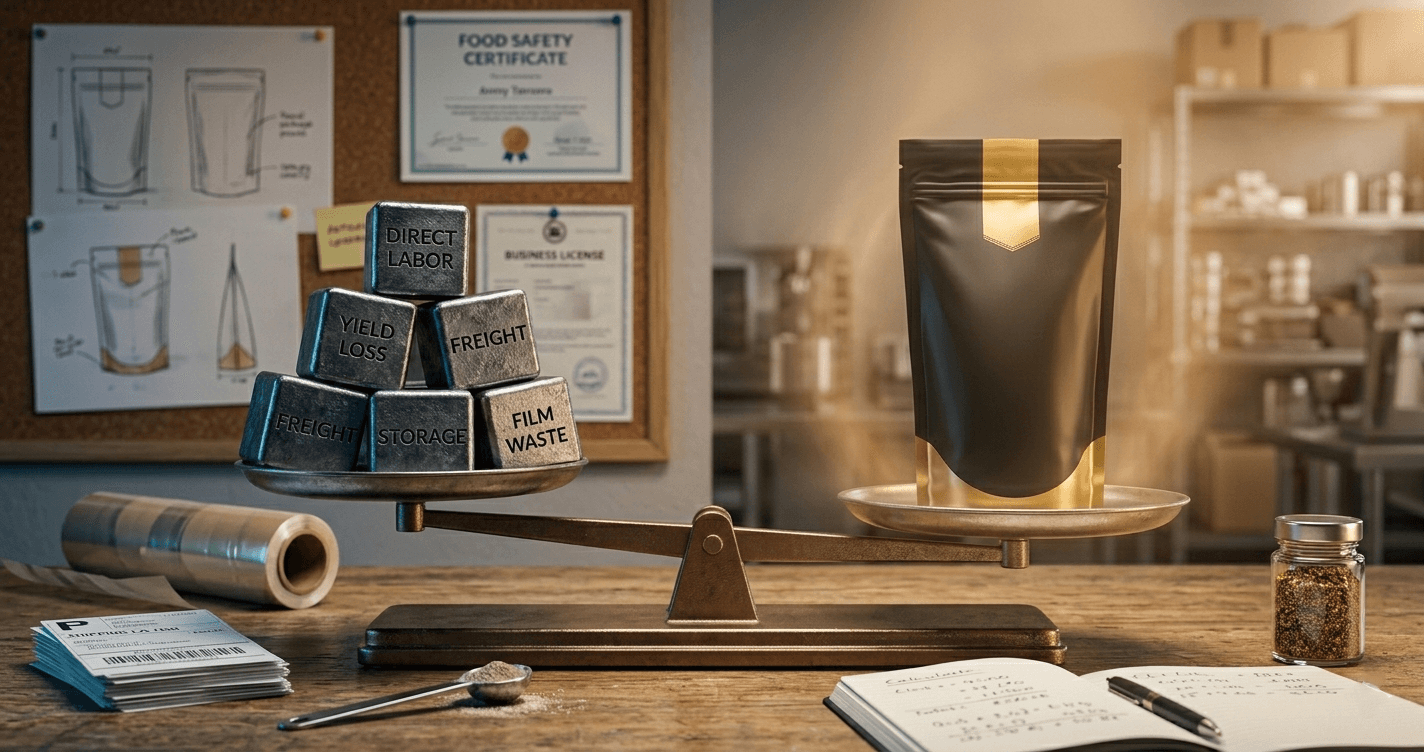
When meal kit founders calculate their meal kit packaging cost, they almost always make one critical mistake: they only look at the per-unit cost of the outer box. The truth is, your meal kit box isn’t your product; it’s the shipping container. The *real* cost is a complex bundle of materials, freight, labor, and even the customer’s experience.

For years, the standard corrugated box was the default. But as the market matures and margins get tighter, savvy brands are realizing that boxes are heavy, bulky, and shockingly expensive to ship. The strategic shift to lightweight, flexible pouches for the ingredients *inside* the box isn’t just a trend—it’s a critical, data-driven, cost-saving measure. Let’s break down the true cost comparison.

1. The “Dimensional Weight” Shipping Trap

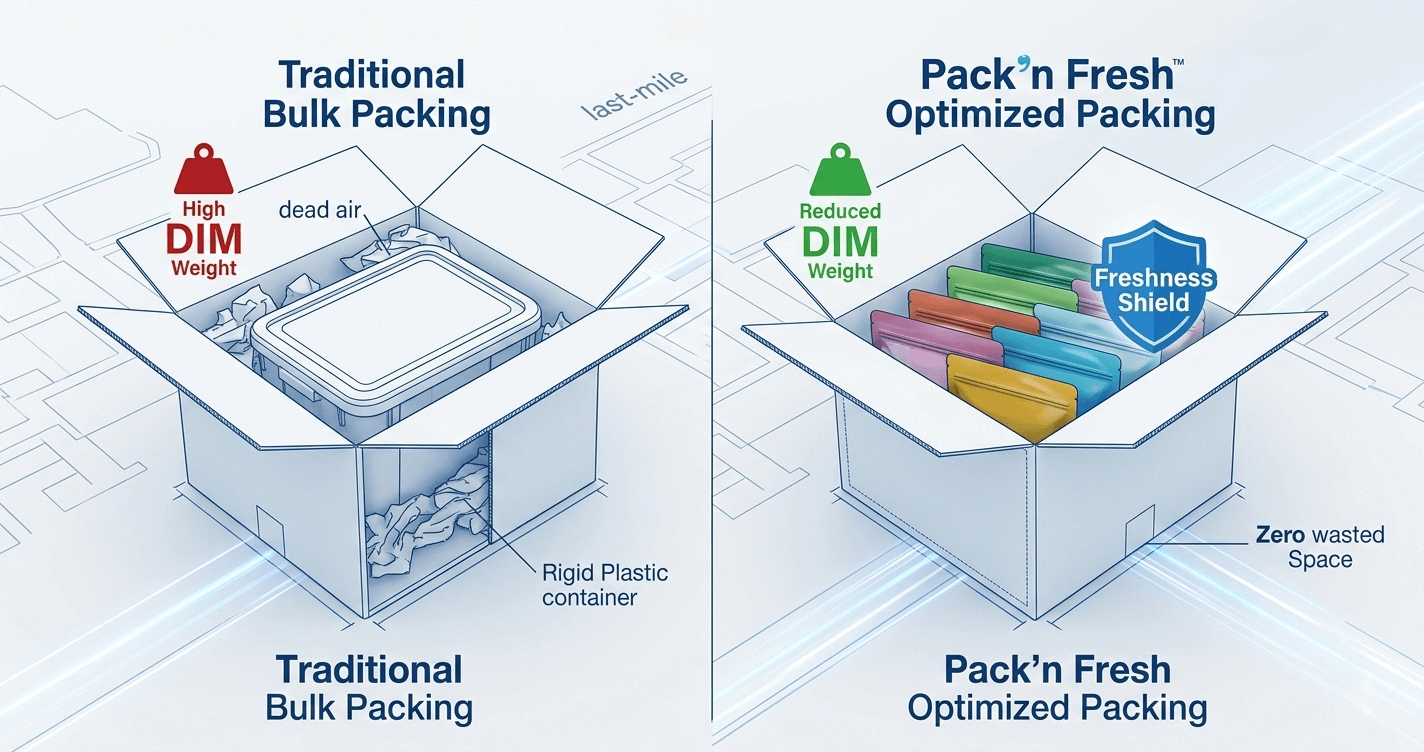
Freight carriers like FedEx and UPS don’t just charge for how much your box weighs; they charge for how much space it takes up. This is called dimensional weight (DIM), and it’s the single biggest hidden fee in the meal kit packaging cost structure.

The Box Problem: You Are Paying to Ship Air

A large, half-empty box filled with smaller rigid containers (jars, tubs) and void-fill (like bubble wrap or crinkle paper) costs a fortune. That 1 oz of spice in a 4-inch-tall plastic jar, surrounded by 6 inches of air-filled pillows, might be billed as 2 lbs by the carrier. You are literally paying freight charges for empty space.

The Pouch Solution: Slashing DIM Weight

Flexible pouches are form-fitting and lightweight. They allow you to pack all your ingredients into a much smaller, denser final box. This single change can slash your DIM weight costs by 20-30% or more, which are often the most expensive part of your fulfillment budget.

2. The Hidden Labor and Material Costs

The cost of the box itself is just the beginning. The real cost is the “ecosystem” of packaging needed to fill it.

The “Packaging Avalanche” Problem

A typical meal kit box requires an entire team of other packaging: the outer box, tape, void-fill, and separate rigid containers (plastic tubs, clamshells, jars) for every single spice blend, sauce, or chopped vegetable. Your team (or co-packer) has to source, store, and manually assemble all these different pieces. This is a DIY packaging nightmare that multiplies your SKUs and labor costs.

The Pouch Solution: Consolidation

A turnkey co-packer specializing in pouches (like Pack’n Fresh) consolidates this entire, complex process. We source the high-barrier film, blend the spices, and automatically portion, pack, and seal the finished, branded ingredient. Your “packaging” for that ingredient becomes a single, pre-portioned item. This dramatically cuts down on material SKUs, storage needs, and the expensive labor time required for manual kitting.

3. The Customer Experience Cost: A Bad Unboxing

Don’t underestimate the long-term financial cost of a bad unboxing experience. It directly impacts customer loyalty and repeat purchases.

The Box Problem: Wasteful and Frustrating

Customers are growing tired of the “packaging avalanche.” They are left with a mountain of non-recyclable plastic tubs, a bulky box to break down, and plastic air pillows that fill their trash can. It’s wasteful, feels cheap, and creates a negative brand association—a significant hidden cost.

The Pouch Solution: Premium and Sustainable

High-quality, custom-printed pouches create a premium, organized, and professional experience. The customer receives a neat, easy-to-open set of ingredients that feel thoughtfully prepared. It reduces household waste, reinforces the value of your brand, and makes the customer feel good about their purchase—leading to better reviews and higher retention.

The Verdict: Where Pouches Win the Cost Battle

Boxes still have their place—as the final *shipper*. But for packaging the *actual ingredients*—especially small-format items like spices, sauces, grains, and powders—pouches are the undisputed financial winner. Analyzing the total meal kit packaging cost reveals a clear picture:

  • Lower Freight Costs: Pouches slash DIM weight, saving you money on every single order.
  • Lower Material Costs: They eliminate the need for a separate tub, jar, lid, and void-fill for each item.
  • Lower Labor Costs: Automation replaces slow, expensive manual kitting.
  • Higher Brand Value: A premium, sustainable unboxing experience leads to higher customer loyalty.

Calculate Your True Meal Kit Packaging Cost

Ready to see how much you could save by switching to a turnkey pouch packaging system? Pack’n Fresh specializes in high-quality, < 2lb pouches for meal kit companies. Contact us for a free, detailed cost analysis.

Get a Free Cost Analysis

The True Cost of DIY Food Packaging: Why Brands Outgrow Multiple Vendors Fast

Pack'n Fresh - The True Cost of DIY Food Packaging.png

The True Cost of DIY Food Packaging: Why Brands Outgrow Multiple Vendors Fast

The Hidden Flaw in the DIY Food Packaging Model

When food brands first launch, a DIY food packaging strategy feels like the smart move. You find one supplier for raw ingredients, another for your packaging film, a third for blending, and maybe even a separate kitting provider. At first glance, this patchwork model looks flexible, lean, and cost-effective. But this is a dangerous illusion. As orders grow, the “flexible” model starts to unravel. Hidden costs creep in, complex logistics create bottlenecks, compliance becomes a nightmare, and suddenly the “savings” vanish, replaced by mounting expenses and stress.

Let’s break down the true cost of DIY food packaging, why that vendor management model almost always becomes more expensive in the long run, and why turnkey copacking is the smarter path for any food brand that wants to scale.

The Hidden Costs No One Tells You About

The sticker price from your individual suppliers is not the true cost. The real expenses are hidden in the gaps *between* your vendors.

1. Crippling Freight and Logistics Overload

Every transfer adds a new bill. Ingredients must be shipped to your blender. The blended product must be shipped to your packager. The finished pouches must be shipped to your warehouse or 3PL. Each leg of this journey brings freight bills, fuel surcharges, and handling fees. A startup moving just 10,000 pouches per month could easily spend an extra $5,000–$10,000 annually just shuffling its own product between facilities. This doesn’t even account for the increased risk of damage, loss, or spoilage with every additional handover.

2. The Time Drain of Constant Coordination

With a DIY vendor model, you are the full-time project manager. Your team’s valuable hours are spent chasing updates, coordinating timelines, and putting out fires. What happens when your packaging film is delayed by one week? Your blender, your packager, and your entire production schedule slip. That delay isn’t just frustrating—it could mean missing a seasonal launch window, letting a major retail PO fall through, or running out of stock on your website, killing your sales momentum.

3. Quality Assurance and Compliance Headaches

In a multi-vendor system, every new partner is another potential point of failure. You must audit each one, verify their certifications, and manage separate mountains of paperwork. Each supplier has different quality standards, and you are left trying to stitch together a unified compliance system with no central accountability. If there’s a quality issue, who is to blame? The ingredient supplier? The blender? The packager? This “finger-pointing” is a massive risk to your brand.

Risk Factors That Multiply with Every Vendor

Beyond the financial costs, a fragmented supply chain introduces serious risks that can damage or even destroy a growing brand.

Risk 1: Product Contamination

Food safety is paramount. Every time your product is unloaded, stored, and re-loaded at a new facility, the risk of cross-contamination, pest issues, or environmental exposure (like humidity) increases. More touchpoints equal a higher probability of a critical error.

Risk 2: Mislabeling and Portioning Errors

When your film supplier and your packager are two different companies, the room for error skyrockets. Poor communication often leads to inconsistencies. The wrong film might be used for the wrong product, allergen information could be incorrect, or portioning machines at one facility might not be calibrated to match the claims on the label from another, leading to an undeclared allergen risk.

Risk 3: Catastrophic Recall Unreadiness

This is the nightmare scenario. Imagine trying to trace one bad ingredient lot across four separate suppliers, all using different tracking systems. With no unified ERP, a recall investigation that should take minutes can take days. As FDA-mandated recalls become more common, those wasted days can mean irreparable reputational damage and legal liability. It’s a risk scaling brands cannot afford, which is why a copacker with an integrated ERP is so critical.

Why Turnkey Copacking Solves the Problem

A single-source, turnkey copacker like Pack’n Fresh eliminates these risks by managing the entire chain: sourcing, blending, portioning, packing, kitting, and shipping. This isn’t just a small improvement; it’s a fundamentally different, more secure model.

  • You get one freight bill (for the finished product), not three or four.
  • You have one QA team auditing the entire, end-to-end process.
  • You have one ERP system tracking every ingredient and batch from arrival to shipment.

Instead of duct-taping a fragile supply chain, you get a streamlined system that saves significant money, protects your brand, and lets you focus on growth.

Checklist: Signs You’ve Outgrown DIY Food Packaging

If you’re experiencing any of the following, you’ve already crossed the threshold where DIY food packaging is costing you more than it’s saving.

  • You are juggling more than 3 separate suppliers for one product.
  • Your team spends more time chasing logistics updates than on marketing or sales.
  • Freight charges between your own facilities are eating into your margins.
  • You have experienced at least one compliance or labeling scare in the last year.
  • You cannot confidently trace an ingredient lot in under 10 minutes.

Final Word

DIY vendor management works for the first few months of a brand’s life, but it has a low ceiling. It’s a model built for hobbies, not for businesses. If you want to scale, protect your margins, and sleep at night, you need one accountable, professional partner. Pack’n Fresh specializes in turnkey copacking—sourcing, blending, portioning, and packing all under one roof, backed by ERP for total traceability and compliance.

Calculate Your True Packaging Cost

Meal Kit Packaging in 2025: 7 Innovations That Will Define the Industry

Packnfresh Meal Kit Packaging

Innovative meal kit packaging is the single most important factor driving the industry’s explosive growth. Meal kits are one of the fastest-growing segments in food, projected to hit $64.27 billion globally by 2030. But this success is built on a complex logistical promise: delivering fresh, perishable food safely to a customer’s doorstep. Get the packaging wrong, and you face a cascade of failures: spoiled food, high return rates, and a damaged brand reputation. Get it right, and you unlock customer loyalty, drastically reduced waste, and incredible operational efficiency.

The container is no longer just a box; it’s a key part of the product. Here are the seven meal kit packaging innovations that will define the industry in 2025 and beyond.

1. Smart Packaging Becomes an Expectation

What was once a novelty is now a necessity. Smart packaging, which uses interactive features like QR codes, NFC tags, and even freshness sensors, is how brands build trust. Customers now expect to scan a pouch with their phone and instantly see detailed recipes, video cooking guides, exact allergen information, or the farm-to-table sourcing details of their ingredients. By 2025, a meal kit without this layer of interaction will feel outdated and less transparent. This technology transforms the package from a simple container into a digital hub for the entire cooking experience.

2. Compostable Films and Fiber-Based Trays Replace Plastics

The original sin of the meal kit industry was its mountain of plastic waste. Today’s consumers are highly conscious of sustainability, and brands are responding. Municipal bans and retailer mandates are pushing compostable films, recyclable pouches, and molded fiber-based trays into the mainstream. For a meal kit brand, which already generates significant material waste by its very nature, switching to sustainable meal kit packaging isn’t just an ethical choice—it’s an essential strategy for earning and maintaining customer trust.

3. Precision Portion-Control Pouching

Consumers hate food waste, and brands hate cost waste. This shared goal is driving the demand for precision portioning, especially in flexible pouches for formats under 2 lbs. The ability to automatically and accurately measure the exact portion of spices, a delicate sauce, or a specific powder blend is critical. This innovation ensures a consistent, perfect recipe every time for the customer, eliminates food waste at home, and dramatically improves the brand’s unit economics by preventing over-portioning.

4. Active Packaging Extends Critical Shelf Life

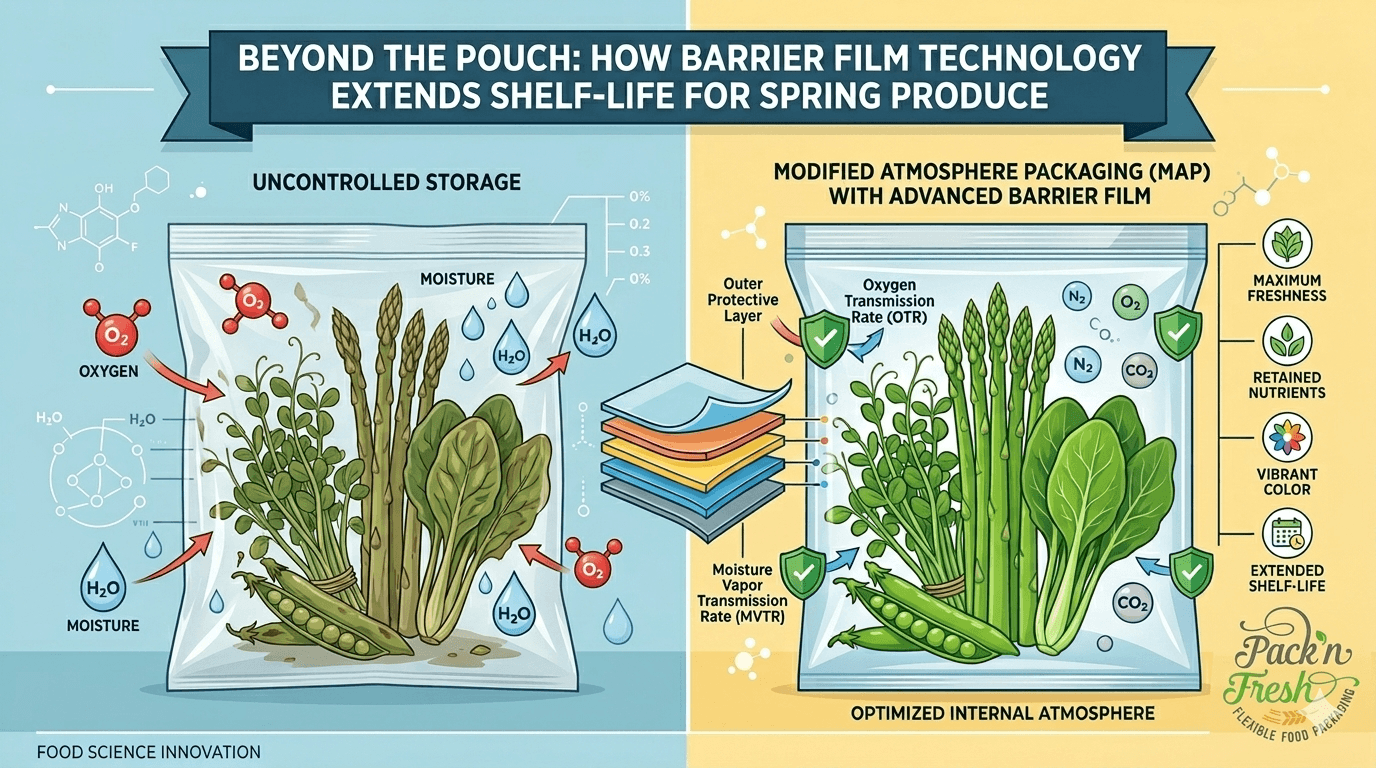
A meal kit’s supply chain is a race against the clock. Freshness is the entire value proposition. This is where active packaging technologies become a game-changer. Innovations like Modified Atmosphere Packaging (MAP), which adjusts the air composition inside a pack, along with oxygen absorbers and ethylene-scavenging films (which slow ripening), can extend the shelf life of fresh produce and proteins by days or even weeks. For brands shipping kits cross-country, this technology is the difference between a fresh, crisp salad and a spoiled, returned box.

5. Refillable Models Create Loyalty Loops

The subscription model is evolving. Customers are now embracing refill models for pantry staples. Smart meal kit brands are adopting this by shipping a durable, branded spice jar or oil bottle in the “starter kit.” Subsequent meals then arrive with the spices and oils in small, 100% compostable refill pouches. This simple change reduces waste, keeps your branded container in the customer’s kitchen as a constant reminder, and builds powerful “loyalty loops” that encourage repeat subscriptions.

6. ERP-Backed Supply Chain Visibility

The most important innovations aren’t always customer-facing. Behind the scenes, ERP (Enterprise Resource Planning) integration has become a massive competitive edge. A meal kit brand that partners with an ERP-backed copacker gains real-time, end-to-end visibility into their entire operation. They can see ingredient stock levels, track lot codes for compliance, and monitor production timelines instantly. This data-driven approach cuts risk, ensures food safety, and enables brands to scale rapidly and reliably.
This traceability is exactly why choosing a copacker with an ERP is a non-negotiable for growing brands.

7. The Unboxing Experience as a Marketing Channel

In the age of social media, the unboxing experience *is* the first experience. On platforms like TikTok and Instagram, your meal kit packaging is often the first impression a potential customer will ever see. Smart brands treat this as a powerful, free marketing channel. Using seasonal designs, limited-edition graphics for holidays, and vibrant custom printing on pouches can make the meal kit feel premium, exciting, and highly shareable. A great unboxing experience turns your customers into your marketers.

Final Word

By 2025, your meal kit packaging won’t just be a container—it will be your most valuable strategic asset. The winners in this crowded space will be the brands that embrace packaging that is smart, sustainable, precise, and customer-centric. At Pack’n Fresh, we help meal kit brands integrate these innovations today—from precision portioning to active packaging—so they can stay competitive and thrive tomorrow.

Get a Quote for Your Meal Kit Packaging

How Supplement Brands Can Win with Custom Pouch Packaging

A collection of supplements in modern custom pouch packaging

Custom pouch packaging is rapidly becoming the industry standard for supplement brands, and for good reason. As the global supplement market grows, competition is fierce. While your product’s formulation is critical, its packaging is the first thing a customer sees. For savvy brands, moving from bulky bottles to flexible, modern pouches isn’t just a trend—it’s a strategic move to cut costs, enhance brand appeal, and improve the customer experience. This guide explores why custom pouch packaging is the key to standing out and scaling your business.

Key Advantages of Custom Pouch Packaging

Brands are making the switch because the benefits are too significant to ignore. From user convenience to shelf presence, pouches deliver on multiple fronts.

Superior Convenience and Portability

Today’s consumers live on-the-go lifestyles. Bulky bottles are inconvenient to carry in a gym bag or suitcase. Custom pouch packaging solves this with single-serving sachets and travel-friendly packs, making it easy for customers to maintain their supplement routine anywhere.

Stand-Out Shelf Presence

A crowded supplement aisle is a battle for attention. Custom pouch packaging offers a larger, more vibrant canvas for branding than a bottle label. With options for full-color printing, matte or gloss finishes, and unique textures, your product can create a premium, eye-catching presence that draws customers in.

Commitment to Sustainability

Modern consumers, particularly Millennials and Gen Z, actively seek out sustainable brands. Pouches use significantly less plastic than rigid bottles and are much lighter, which reduces shipping-related carbon emissions. Offering options made from recyclable or compostable materials demonstrates your brand’s commitment to the environment, a powerful purchasing driver.

Compliance and Safety in Supplement Packaging

Supplements are regulated by the FDA, with strict GMP (Good Manufacturing Practices) requirements for traceability and labeling. This is non-negotiable. Mistakes can lead to costly recalls or business closure. A professional copacker using an ERP system is vital for ensuring your custom pouch packaging meets all standards. They provide:

  • Digital lot tracking for every single ingredient and finished product.
  • Audit-ready records for FDA or GMP inspections.
  • Precise, automated portioning to ensure label accuracy.

Bottles vs. Pouches: The Financial Benefits

For small and medium-sized brands, every dollar counts. This is where custom pouch packaging truly shines, offering clear economic advantages over traditional bottles.

Lower Shipping and Storage Costs

Pouches are lightweight and pack flat, drastically cutting freight costs compared to heavy, space-consuming bottles. This efficiency extends to warehousing, as you can store more units in less space, lowering overhead.

Feasible Minimum Order Quantities (MOQs)

Testing a new product line with bottles often requires a massive upfront investment in inventory. The flexible printing process for pouches allows for smaller, more manageable print runs, reducing the financial risk of launching new SKUs and allowing you to test the market effectively.

How Custom Pouch Packaging Drives Business Growth

Good packaging does more than just hold your product; it actively helps grow your business by creating new opportunities and strengthening customer relationships.

  • Supports Subscription Models: Pre-portioned 30-day supplies in refill pouches are perfect for subscription boxes, simplifying logistics and encouraging recurring revenue.
  • Differentiates Your Brand: High-quality, thoughtfully designed custom pouches signal a premium product inside, justifying a higher price point and building brand equity.
  • Encourages Product Trials: Offering smaller, sample-sized pouches is a low-cost, low-commitment way for new customers to try your product, reducing the barrier to a first-time purchase.

FAQ: Your Custom Pouch Packaging Questions

Are pouches FDA-approved for supplements?
FDA regulates the packaging environment and labeling, not the pouch format itself. With ERP-backed copacking, you’re audit-ready.
How does pouch packaging affect shelf life?
Modern pouches use high-barrier films that protect against moisture, oxygen, and UV light just as effectively as bottles. Because they are flexible, they often contain less “headspace” (trapped air), which can actually improve the stability of powders and capsules.

Final Word

For any modern supplement brand, packaging is a critical pillar of your strategy. Custom pouch packaging delivers on all fronts: it cuts costs, ensures compliance, elevates your brand, and meets the demands of today’s consumer. It’s the smarter, more flexible solution for a competitive market.

Ready to get started? Request a free quote for your custom supplement pouches today!

Why custom packaging is the next big thing for food brands that are growing quickly

custom food packaging

Food brands are always under pressure to stand out in a market that is getting more and more crowded. People have a lot of choices when they go to the store, which can make it hard for them to make a decision. So, how can a food brand that is growing quickly stand out? The answer is custom food packaging.

Branding is quickly moving into the next area: custom food packaging. It’s a powerful way for brands to differentiate themselves while offering consumers an engaging and personalized experience. Food brands can connect with their customers on a deeper level, strengthen their brand identity, and build loyalty through personalized food packaging. At the same time, they can make sure their products are safe and easy to use.

What is food packaging that is made just for you?
Custom food packaging is any type of packaging that is made just for a brand and its products. Custom food packaging shows off a brand’s unique personality, values, and message, instead of using generic packaging. This could mean anything from the colors and materials used to the shape of the packaging itself.

Some food brands, for instance, use eco-friendly materials in their packaging to show that they care about the environment. Some people might be more interested in new shapes or designs that stand out on the shelves. With custom packaging, brands can make sure that every part of the packaging fits their product’s personality and the tastes of their target market.

The Power of Packaging in Branding Today
Packaging is no longer just a way to protect a product; it is now an important part of a brand’s identity. As people buy things more and more based on how they make them feel, personalized food packaging is important for getting people to recognize and stay loyal to your brand.

The packaging is often the first thing a customer sees when they look at a product. A package that is well-designed can make people curious and make them pick it up, look at it, and even buy it. It’s not enough to just make the product look good; you also have to tell a story with the visuals that shows what the brand stands for and what it wants to do. Food companies can leave a lasting impression by carefully choosing packaging elements that fit with the brand’s voice.

Custom Packaging as a Way to Stand Out in a Crowded Market
There are a lot of options in the food market. There are a lot of choices for consumers, and many of them sell the same things. In a market with so many options, custom food packaging is a key way to stand out. Brands can’t just rely on the quality or taste of their products anymore; packaging is an important part of getting people’s attention and making a lasting impression.

Custom packaging has really shone in the area of food pouch branding. Food pouches have some benefits over regular packaging, like being flexible, light, and lasting longer. This packaging is very flexible and can be changed in many ways, allowing brands to try out bold designs, fun graphics, and unique shapes that catch people’s attention. This is especially helpful for food brands that are growing quickly and need to make a big impression right away in a crowded retail space.

Using flexible packaging design
Custom food packaging is also very useful because it can be designed to fit different needs. Stand-up pouches, resealable bags, and flexible cartons are all types of flexible packaging. Food brands like these options because they are flexible, affordable, and can be changed in many ways to meet the needs of the brand.

Flexible packaging is useful for food brands because it lets them be creative with their designs while still making sure the packaging works. It also helps keep things fresh for longer, which is especially important for things that go bad quickly. Features like resealable zippers or edges that don’t tear can be added by brands to make sure the product looks good and is easy to use.

Custom packaging helps keep customers coming back.
In today’s market, loyalty isn’t just about giving customers a good product; it’s also about giving them a full experience. Customized food packaging helps brands and customers get to know each other better. A package that shows the customer’s values or way of life can make them feel connected to the brand and get them to buy again.

When companies go the extra mile to make packaging that speaks to their customers, people are more likely to trust and connect with the brand. Custom food packaging can be a great way to build loyalty. For example, eco-friendly packaging that appeals to environmentally conscious customers or one-of-a-kind designs that make people feel special can do the trick.

Also, seasonal packaging or limited-edition designs can get customers excited and make them want to buy more often or share their experiences on social media. This not only boosts sales, but it also makes the brand more well-known in the market.

How it affects sustainability and how people see it
As sustainability becomes more important, brands are looking for ways to package their products that have less of an effect on the environment. Food companies can choose eco-friendly packaging options, such as using biodegradable materials and eco-friendly manufacturing processes, when they use custom food packaging.

People are becoming more aware of the environment and are more likely to buy from brands that care about sustainability. Food brands can meet customer expectations and show that they care about the environment by using eco-friendly materials in their packaging. In this way, custom food packaging is a big part of how people see things and how they decide what to buy.

In conclusion, the future of custom packaging in food branding
As the food industry grows and changes, custom food packaging will become more and more important for building brands. Food brands that put money into personalized packaging will be better able to stand out in a crowded market, connect with customers on an emotional level, and keep them coming back for more. Custom packaging gives you a lot of ways to stand out and grow, like with creative food pouch branding, flexible packaging design, or eco-friendly efforts.

People today want real connections and authenticity. Custom packaging lets food brands tell their stories, show their values, and ultimately shape their future success.

How Smart Active Packaging Is Changing Freshness and Safety from Farm to Fork

smart active food packaging

Food packaging is no longer just a way to keep food safe; it’s also a way to make it easier for people to buy and eat. It is essential for keeping food safe, making it last longer, and making sure that it gets to customers in the best possible condition. Packaging improvements are making a big difference in keeping food fresh and safe as it goes from farm to fork. One of these innovative ideas, smart active packaging, has revolutionized the preservation of fresh food.

What is Active Food Packaging?
Active food packaging is a type of technology that does more than just put food in a container. Active packaging is different from regular packaging because it doesn’t just keep things from getting in; it also interacts with the food to keep it fresh and extend its shelf life. These materials are made to actively change or control the environment around the food by changing things like temperature, moisture, and oxygen levels.

Some common types of active food packaging are modified atmosphere packaging (MAP), ethylene scavengers, and several freshness technologies. These new ideas help keep food fresh for longer and protect it from going rotting because of things like light and oxygen.
This section explains how food remains fresh when using active food packaging.

The main goal of active packaging is to keep food fresh by storing it in the best conditions. One of the most common methods used in active packaging is modified atmosphere packaging (MAP). MAP helps slow down the natural processes of decay and spoilage by changing the air inside the packaging, such as by controlling the amounts of oxygen, carbon dioxide, and nitrogen. For instance, lowering the amount of oxygen can stop microorganisms from growing, and raising the amount of nitrogen can stop fatty foods from oxidizing.

Using ethylene scavengers is another important technology in active packaging. Ethylene is a gas produced by fruits and vegetables that accelerates the ripening process. Ethylene scavengers soak up this gas, which slows down the ripening process and keeps fruits and vegetables fresh for longer. This technology is especially helpful for retailers and distributors because it keeps produce fresh while it’s being shipped and on store shelves, which cuts down on food waste and extends shelf life.

Active packaging’s effect on shelf life solutions is an important topic in food preservation.
One of the best things about active food packaging is that it can make food last longer. The packaging slows down the process of food going stale by controlling the air and other environmental factors inside. This keeps food fresh, tasty, and nutritious for longer.
The result means that customers can get fresher products for longer, which means they have to go to the store less often and waste less food. Food manufacturers and retailers benefit from the longer shelf life because it cuts down on spoilage during storage and transportation, making sure that products get to their destination in the best possible condition.


How Smart Active Packaging Works
Traditional active packaging changes the environment inside the package, but smart active packaging goes a step further by using sensors and data analytics. This packaging can keep an eye on the food’s condition in real time and provide you important information about gas levels, temperature, and humidity. Some smart packaging even changes color or sends alerts when food is about to go bad, which helps people make smart choices about what to eat.
For example, some packaging solutions have sensors built in that keep track of the food’s temperature or moisture levels. If these levels go outside of the ideal range, the packaging can react by releasing an antioxidant or soaking up extra moisture. This changing interaction keeps food as fresh as possible until it’s time to eat it.


The Future of Active Food Packaging and Sustainability
As more and more people want sustainable products, the future of food packaging is moving toward solutions that are beneficial for the environment. Researchers are trying to make active packaging materials that are biodegradable and recyclable and offer the same benefits as regular plastic but are better for the environment. This change is crucial for cutting down on packaging waste, which is a big problem for the environment.

The growing need for shelf life solutions may lead to the development of even more advanced technologies. There could be even better sensors, ethylene scavengers that last longer, and smarter ways to keep food safe without using too much plastic in the future. These new ideas will probably focus on cutting down on food waste even more, making food safer, and giving customers more faith in the things they buy.


In conclusion,
Smart active packaging is changing the way we store, preserve, and eat food. The packaging industry is making great progress in making food last longer while keeping it safe and of good quality. Some of the new technologies that are contributing to food preservation include modified atmosphere packaging (MAP), ethylene scavengers, and freshness technology. These technologies are beneficial for the environment because they cut down on waste and make things better for customers.

As people want packaging that is smarter, safer, and better for the environment, we can expect to see even more advanced solutions come out soon. The development of new food packaging technology promises a more sustainable and fresher future for the food industry, which is good news for food manufacturers, retailers, and consumers.

How Modern Contract Packers Are Leading the Shift Toward Reusable & Refillable Systems.

Modern-Contract-Food-Packers

The packaging industry is undergoing a transformation. At the heart of this change are food packaging companies that are embracing more sustainable practices. One of the most significant developments is the rise of reusable and refillable systems—solutions that offer both environmental and commercial benefits.

Modern contract packers are playing a key role in this shift. By integrating reusable food packaging and refillable pouch systems into their services, they are helping brands reduce waste, save on materials, and meet growing consumer demand for sustainability.

The Problem with Traditional Packaging

For decades, single-use plastics and non-recyclable materials dominated food packaging. While these materials were cheap and effective, they also contributed significantly to the global waste crisis. Today, consumers are more informed and concerned about the environmental footprint of the products they buy. Brands that fail to adapt are losing trust—and market share.

Food packaging companies have been forced to rethink their strategies. This is where sustainable contract packing steps in.

The Role of Contract Packers in Sustainable Packaging

Contract packers, or co-packers, are third-party service providers that handle the packaging process for brands. They’ve traditionally focused on speed, cost-efficiency, and quality control. But the new wave of eco-friendly packaging solutions is changing their priorities.

Leading food packaging companies are now investing in systems that support reusability and refillability. Instead of using single-use plastic, these packers are working with materials that can be reused multiple times or easily refilled. This minimises waste and helps brands align their sustainability goals.

Reusable Food Packaging: A Smarter Alternative

Reusable food packaging involves containers, pouches, or boxes that are designed for multiple uses. Contract packers are helping brands switch to these models by handling everything from design to logistics.

For example:

  • Glass jars and metal tins for sauces, spices, and snacks.
  • BPA-free plastic containers with resealable lids.
  • Refillable pouches with spouts for liquids and semi-liquids.

These systems are not only better for the environment but also enhance brand image. Consumers are more likely to remain loyal to companies that demonstrate genuine care for the planet.

Refillable Pouch Systems: Innovation Meets Convenience

Another growing trend is refillable pouch systems. These are particularly popular for sauces, condiments, and even pet food. Contract packers have adopted machinery and processes that make it easy to fill, seal, and ship these pouches at scale.

These systems:

  • Reduce the need for rigid packaging like glass or metal.
  • Offer lightweight options that lower shipping costs.
  • Encourage consumers to refill at home or in-store.

Many food packaging companies now offer subscription models or in-store refill stations that align with these systems, further reducing waste and packaging costs.

Why Brands Should Care

Sustainability is no longer a niche interest. A large portion of today’s consumers actively seek products with eco-friendly packaging solutions. Regulatory pressures are also increasing, with governments encouraging or mandating reduced plastic use.

By working with food packaging companies that understand sustainable contract packing, brands can future-proof their operations. They can meet regulations, reduce costs in the long run, and appeal to eco-conscious buyers.

Challenges to Overcome

Adopting reusable and refillable systems isn’t without challenges. Initial costs can be higher, and operational changes may be needed. But the long-term benefits outweigh these hurdles.

Modern contract packers help ease the transition by:

  • Offering scalable pilot programs.
  • Managing supply chain adjustments.
  • We provide performance data to guide future decisions.

The Future of Food Packaging

The shift toward reusable and refillable systems is not a passing trend—it’s the future of the industry. Food packaging companies that invest in sustainable contract packing today will lead the market tomorrow.

As consumer behaviour shifts and environmental concerns grow, demand for eco-friendly packaging solutions will only increase. Modern contract packers who prioritise sustainability are not just service providers; they are strategic partners in building a better, greener future.