Category

Procurement Manager

5 Common Food Packaging Mistakes

Food Packaging Mistakes - Pack'n Fresh

5 Common Food Packaging Mistakes (And How to Avoid Them)

Even the best food product will fail if the packaging isn’t right. As we head into 2026, the stakes for food founders are higher than ever. With new federal transparency laws and shifting consumer expectations around “green” materials, a single oversight can derail months of hard work. Understanding these food packaging mistakes is the first step toward building a resilient, retail-ready brand that survives the first year on the shelf.

After years in the industry, the team at Pack’n Fresh has identified the five most common pitfalls that sink growing brands—and exactly how to steer clear of them to protect your margins.

1. Wrong Material Selection

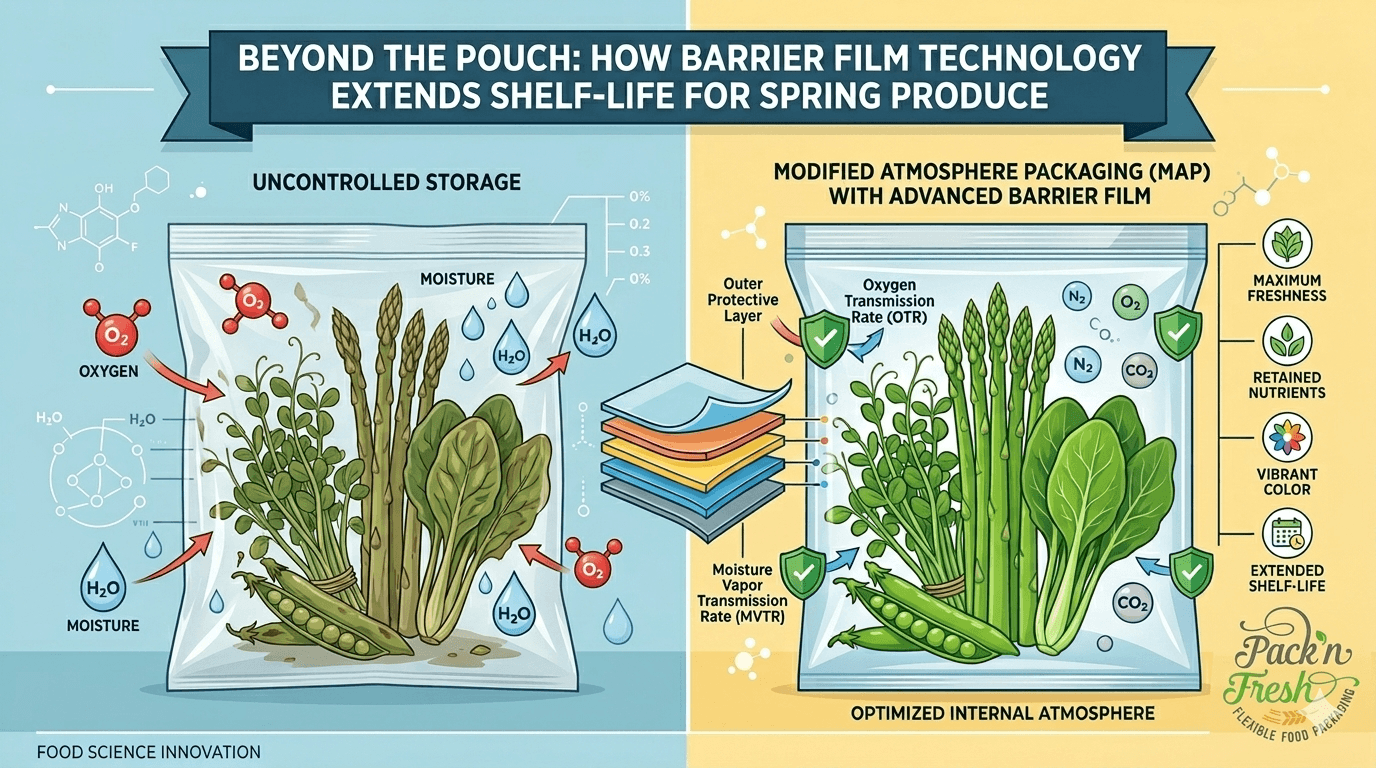
Using a film that doesn’t provide the right barrier for your specific product is a recipe for disaster. Spices and oils are particularly aggressive; the wrong substrate can lead to “wicking” (oils seeping through the seal) or the loss of essential aromas, causing premature spoilage. Choosing the wrong barrier is one of the most frequent food packaging mistakes we see among early-stage startups.

  • Fix: Move toward mono-material high-barrier films. These provide the protection your spices need while ensuring the pouch is fully recyclable, helping you avoid “packaging shame” and rising plastic taxes.

2. Inaccurate Dielines

A dieline is the technical blueprint of your package. If your artwork doesn’t align perfectly with physical trim lines, you risk misaligned barcodes, cut-off nutritional info, or “crease-creep” where graphics disappear into the folds. These technical food packaging mistakes lead to thousands of dollars in wasted inventory.

  • Fix: Never use a generic template. Always get a custom dieline from your production partner. At Pack’n Fresh, we ensure your art fits the physical dimensions of our high-speed pouching machinery before a single drop of ink is laid down.

3. Ignoring Compliance and New Labeling Laws

Failing to format allergen declarations clearly is more than a mistake—it’s a massive legal liability. The FDA has expanded its scrutiny on cross-contact and “Healthy” claims. One missing bolded ingredient or a poorly placed “Contains” statement can lead to immediate federal recalls and permanent brand damage. Recalls are the most expensive food packaging mistakes a brand can face.

  • Fix: Conduct a regulatory audit. Ensure your Nutritional Facts meet the 2025/2026 uniform compliance dates and that your allergen info is hyper-legible for inclusive accessibility.

4. Over-Packaging: The “Sustainability Killer”

Consumers are hyper-aware of “excess.” Sending a small item in a massive box with plastic “filler” looks wasteful and hurts your brand story. It also costs you more in shipping and potential Extended Producer Responsibility (EPR) fees. Many legacy brands are currently redesigning their lines specifically to fix these types of food packaging mistakes.

  • Fix: *Embrace Lightweighting*. Use strength-engineered materials and “right-sized” pouches (we specialize in under 2 lb formats) to minimize your footprint while maintaining premium protection.

5. Copying the Competition

While it’s tempting to mimic the market leader, “shelf sameness” is a death sentence for new brands. If your bag looks exactly like everyone else’s, you aren’t building loyalty—you’re just filling a gap until a cheaper option arrives. Avoiding creative food packaging mistakes is essential for long-term customer retention.

  • Fix: Use your packaging to tell a story. Whether it’s through unique textures, custom-shaped pouches, or QR codes that link to your brand’s supply chain transparency, give the consumer a reason to choose you over the generic incumbent.

The Solution: Prototype Early to Avoid Risk

The best way to avoid these food packaging mistakes is to see, feel, and test your packaging before mass production begins. Partnering with an experienced co-packer allows you to “prototype early,” testing physical samples under real-world conditions (like heat, humidity, and transit) to ensure they perform exactly as intended.

Don’t learn these lessons the hard way. Whether you are launching a new snack or scaling a meal kit, our turn-key expertise in food and wellness products acts as your safety net.

Schedule a packaging audit with Pack’n Fresh today and secure your launch.

The Ultimate Guide to Supplement Co-Packing: From Powders to Pouches

Packnfresh - Supplement Co-Packing

The Ultimate Guide to Supplement Co-Packing: From Powders to Pouches

You’re a supplement brand founder. You’ve spent months, maybe years, perfecting your formulation. You have a product that delivers real results, and you’ve built a brand that customers are starting to trust.

But now you’re facing a problem that has nothing to do with your formula. It’s a logistics and cost problem.

The heavy, rigid plastic tubs you’re using are a bottleneck. They are expensive to buy, expensive to store, and astronomically expensive to ship in an e-commerce and subscription-box world. You’re competing in a crowded market where brand matters, but your “brand” is a small sticker on a generic white tub.

This is the guide for supplement founders who are ready to switch to a smarter, more profitable, and more premium packaging format. We’ll explore why flexible pouches are the future of the industry and how to find a supplement packaging manufacturers to help you make the switch.

Chapter 1: The “Tub Tax”: How Rigid Bottles Are Draining Your Margin

For decades, the rigid plastic tub or “bottle” was the default for protein, collagen, and vitamin powders. In a brick-and-mortar retail world, this made some sense. But in a modern, direct-to-consumer (DTC) model, it’s a financial drain.

We call this the “Tub Tax”—a series of hidden costs you’re paying at every step:

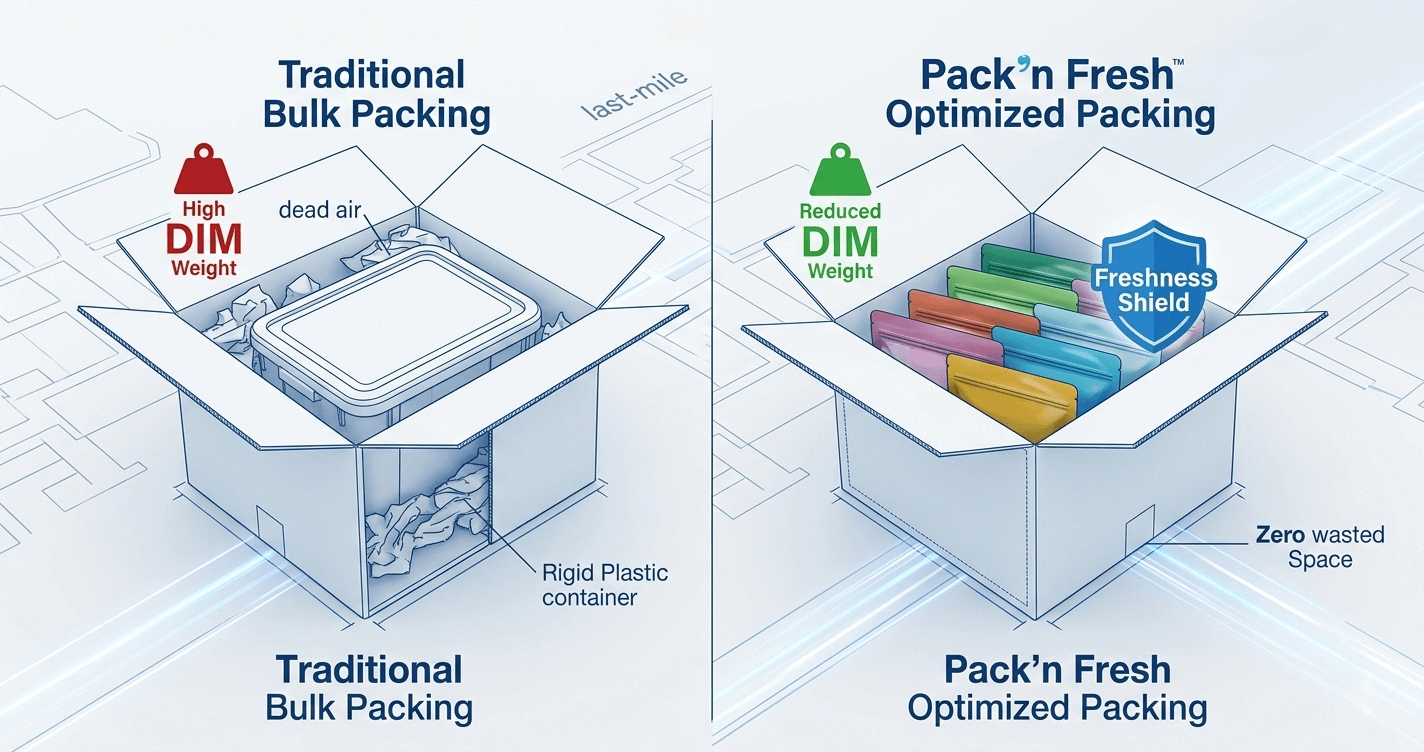
  • You Pay to Ship Air: Tubs are mostly empty air, and they don’t collapse. In an e-commerce world ruled by Dimensional Weight (DIM), you are paying carriers to ship that empty space.
  • You Pay to Store Air: A single pallet of empty tubs takes up a massive amount of expensive warehouse space.
  • You Pay for Inefficiency: Tubs are heavy, prone to cracking, and have high material costs compared to their lightweight counterparts.
  • You Pay with Your Brand: Your branding is limited to a small, applied label. You look like everyone else on the shelf.

This is why you see the most innovative, fastest-growing supplement brands making a universal switch.

Chapter 2: The Pouch Revolution: The #1 Format for Modern Brands

The future of supplement packaging is the flexible, small-format (< 2lb) stand-up pouch.

This isn’t just a trend; it’s a strategic move to a superior format. For a direct-to-consumer brand, pouches solve every problem that tubs create.

  • They Slash Shipping & Storage Costs: A lightweight, form-fitting pouch is the perfect e-commerce package. It’s 70%+ lighter, takes up less space in a subscription box, and drastically cuts your DIM weight shipping costs. One pallet of flat pouches holds the equivalent of 15-20 pallets of empty tubs.
  • They Are a Premium Brand Canvas: The entire pouch is your “billboard.” You get edge-to-edge, stunning, full-color printing. A pouch looks and feels premium, allowing you to stand out in a sea of generic tubs.
  • They Offer a Better Customer Experience: Pouches are portable (gym bags, travel), resealable, and create less plastic waste. This aligns perfectly with the values of a health-conscious consumer.
  • They Unlock New Markets: Pouches allow for two key formats:
    • Bulk Pouches (1-2 lb): The new standard for your core protein/collagen product.
    • Single-Serve “Stick Packs”: The ultimate tool for trial, travel, and subscription box “samplers.”

(Deep Dive: Custom Vitamin Packaging: Why Pouches Beat Bottles)

(Deep Dive: Finding a Low-MOQ Supplement Co-Packer)

Chapter 3: The Science of Supplement Packaging (Protecting Your Formula)

Your #1 asset is your formula. Your packaging’s primary job is to protect its potency and freshness from its two greatest enemies: moisture and oxygen.

This is where your co-packer’s food science expertise is non-negotiable.

1. The Moisture Menace (Clumping)

Powders (especially those with botanicals or vitamins) are hygroscopic—they love to absorb moisture from the air. This causes clumping, ruins mixability, and can degrade the product.

  • The Solution: A high-barrier pouch film is your first defense. The second is a desiccant (a moisture-absorbing packet) inserted into the pouch by your co-packer. This “pulls” all residual moisture from the pouch, keeping your powder perfectly dry.

2. The Oxygen Problem (Degradation)

Oxygen is the enemy of freshness. It oxidizes fats (going rancid) and rapidly degrades the potency of sensitive ingredients like vitamins (Vitamin C, E) and Omega-3s.

  • The Solution: An oxygen scavenger (or “absorber”). This is a small packet that we insert into the pouch, which then absorbs 99.9% of the destructive oxygen, “locking in” freshness and protecting the potency of your formula for its entire shelf life.

(Deep Dive: What is Active Packaging? A Practical Guide)

Chapter 4: The Compliance & Safety Mandate (Your ERP “Defense”)

The supplement industry is governed by strict FDA regulations (cGMP). You are legally responsible for the safety and traceability of your product, and “I don’t know” is not an answer.

This is why your co-packer’s internal software is critical.

  • DIY Risk: Trying to track ingredient lots across your supplier, your blender, and your packager via spreadsheets is a massive compliance risk.
  • The Professional Solution: A true co-packing partner, like Pack’n Fresh, runs on a single ERP (Enterprise Resource Planning) system. This provides a digital, lot-level “chain of custody” from the moment a raw ingredient arrives to the moment your finished pouch ships. In the event of an audit or recall, you have an instant, professional report.

(Deep Dive: Why Your Co-Packer’s ERP System is Your Best Defense)

Chapter 5: How to Choose Your Supplement Co-Packer

You’re ready to move to pouches. Now you must choose a partner. Be careful: the co-packer who fills 50lb bags of flour is the wrong partner for your high-value, 1lb pouch of protein.

You need a specialist. Ask these questions:

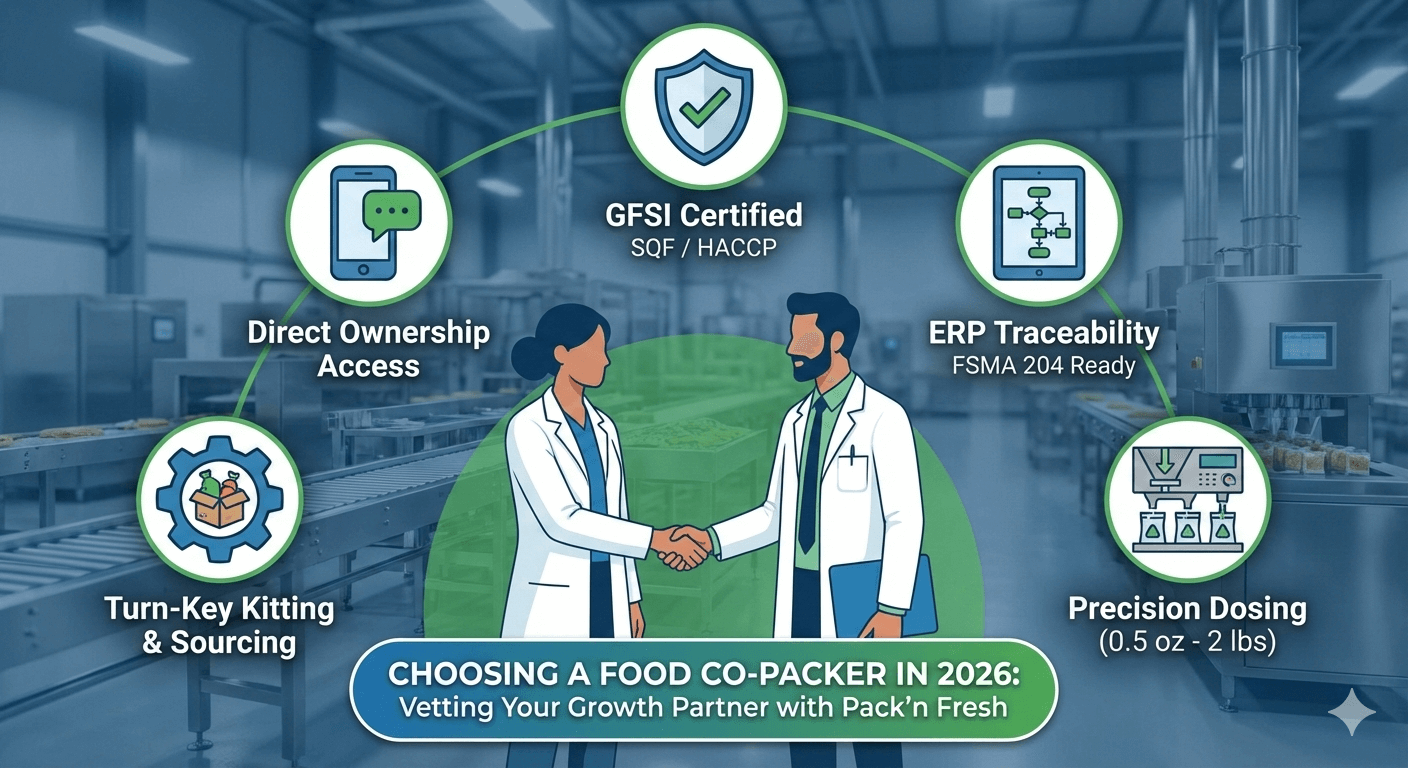
  • What is your specialization? You want to hear: “We specialize in small-format (< 2lb) pouches and turnkey co-packing.” This is our exact focus at Pack’n Fresh.
  • What is your background? You want to hear: “Our co-founders come from food science and quality control.” This proves they are experts in product safety, not just machine operators.
  • What is your equipment portfolio? You want to hear: “We have an extensive portfolio of equipment.” This is the key to flexible MOQs. It means they have the right-sized machine for your brand, whether you’re at 5,000 units or 500,000.
  • Do you offer turnkey services? The answer must be “Yes.” A partner who can source your ingredients, blend your formula, and pack your product is the only way to simplify your business and scale.

Your Next Step: From Bottleneck to Breakout Brand

Stop letting rigid tubs and high shipping costs drain your margins. The move to flexible pouches is the single most effective way to cut costs, elevate your brand, and create a better customer experience.

Pack’n Fresh is the expert turnkey supplement co packer for scaling supplement brands. We provide the food-science expertise, the state-of-the-art pouching equipment, and the ERP-backed compliance you need to compete and win.

Stop paying the “Tub Tax.” Contact us today for a consultation.

Meal Kit Packaging Cost: A Breakdown of Boxes vs. Lightweight Pouches

Meal Kit Packaging Cost

The Critical Mistake in Calculating Meal Kit Packaging Cost

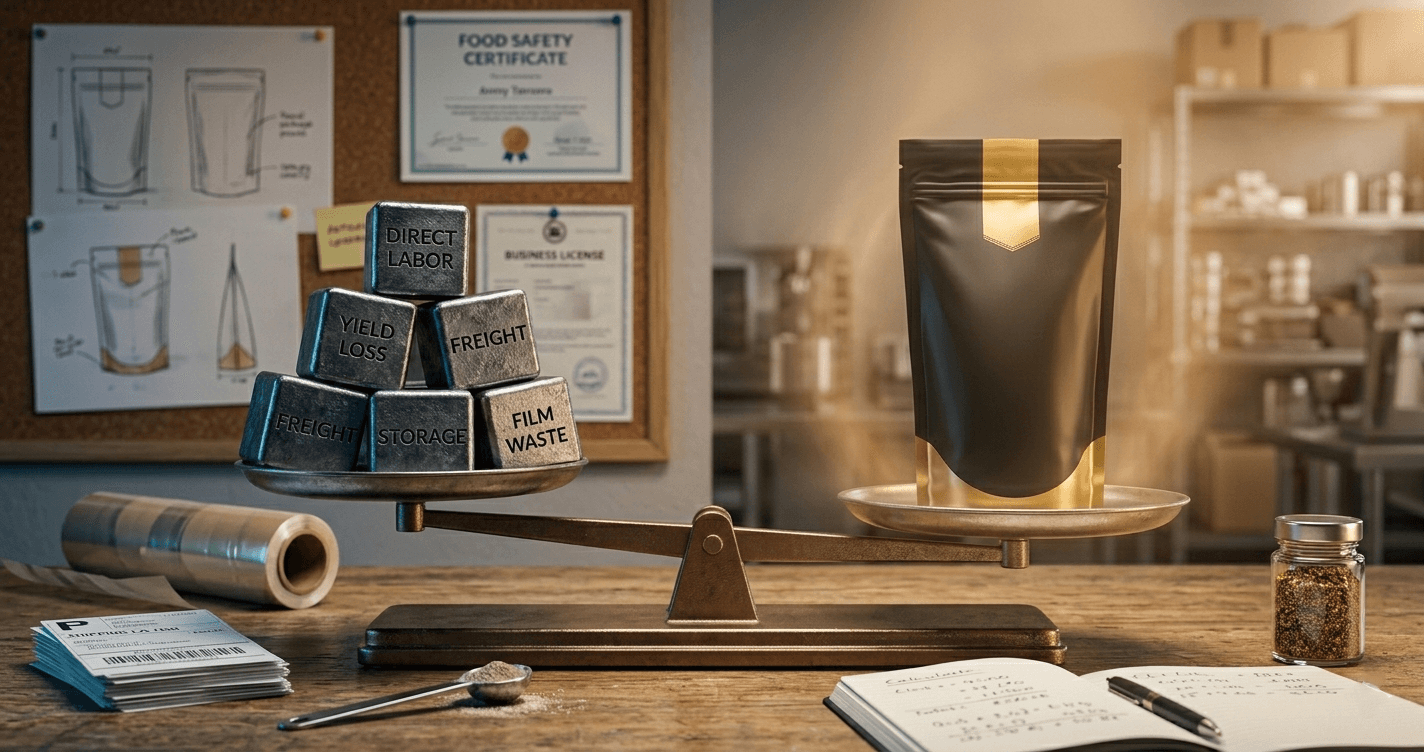
When meal kit founders calculate their meal kit packaging cost, they almost always make one critical mistake: they only look at the per-unit cost of the outer box. The truth is, your meal kit box isn’t your product; it’s the shipping container. The *real* cost is a complex bundle of materials, freight, labor, and even the customer’s experience.

For years, the standard corrugated box was the default. But as the market matures and margins get tighter, savvy brands are realizing that boxes are heavy, bulky, and shockingly expensive to ship. The strategic shift to lightweight, flexible pouches for the ingredients *inside* the box isn’t just a trend—it’s a critical, data-driven, cost-saving measure. Let’s break down the true cost comparison.

1. The “Dimensional Weight” Shipping Trap

Freight carriers like FedEx and UPS don’t just charge for how much your box weighs; they charge for how much space it takes up. This is called dimensional weight (DIM), and it’s the single biggest hidden fee in the meal kit packaging cost structure.

The Box Problem: You Are Paying to Ship Air

A large, half-empty box filled with smaller rigid containers (jars, tubs) and void-fill (like bubble wrap or crinkle paper) costs a fortune. That 1 oz of spice in a 4-inch-tall plastic jar, surrounded by 6 inches of air-filled pillows, might be billed as 2 lbs by the carrier. You are literally paying freight charges for empty space.

The Pouch Solution: Slashing DIM Weight

Flexible pouches are form-fitting and lightweight. They allow you to pack all your ingredients into a much smaller, denser final box. This single change can slash your DIM weight costs by 20-30% or more, which are often the most expensive part of your fulfillment budget.

2. The Hidden Labor and Material Costs

The cost of the box itself is just the beginning. The real cost is the “ecosystem” of packaging needed to fill it.

The “Packaging Avalanche” Problem

A typical meal kit box requires an entire team of other packaging: the outer box, tape, void-fill, and separate rigid containers (plastic tubs, clamshells, jars) for every single spice blend, sauce, or chopped vegetable. Your team (or co-packer) has to source, store, and manually assemble all these different pieces. This is a DIY packaging nightmare that multiplies your SKUs and labor costs.

The Pouch Solution: Consolidation

A turnkey co-packer specializing in pouches (like Pack’n Fresh) consolidates this entire, complex process. We source the high-barrier film, blend the spices, and automatically portion, pack, and seal the finished, branded ingredient. Your “packaging” for that ingredient becomes a single, pre-portioned item. This dramatically cuts down on material SKUs, storage needs, and the expensive labor time required for manual kitting.

3. The Customer Experience Cost: A Bad Unboxing

Don’t underestimate the long-term financial cost of a bad unboxing experience. It directly impacts customer loyalty and repeat purchases.

The Box Problem: Wasteful and Frustrating

Customers are growing tired of the “packaging avalanche.” They are left with a mountain of non-recyclable plastic tubs, a bulky box to break down, and plastic air pillows that fill their trash can. It’s wasteful, feels cheap, and creates a negative brand association—a significant hidden cost.

The Pouch Solution: Premium and Sustainable

High-quality, custom-printed pouches create a premium, organized, and professional experience. The customer receives a neat, easy-to-open set of ingredients that feel thoughtfully prepared. It reduces household waste, reinforces the value of your brand, and makes the customer feel good about their purchase—leading to better reviews and higher retention.

The Verdict: Where Pouches Win the Cost Battle

Boxes still have their place—as the final *shipper*. But for packaging the *actual ingredients*—especially small-format items like spices, sauces, grains, and powders—pouches are the undisputed financial winner. Analyzing the total meal kit packaging cost reveals a clear picture:

  • Lower Freight Costs: Pouches slash DIM weight, saving you money on every single order.
  • Lower Material Costs: They eliminate the need for a separate tub, jar, lid, and void-fill for each item.
  • Lower Labor Costs: Automation replaces slow, expensive manual kitting.
  • Higher Brand Value: A premium, sustainable unboxing experience leads to higher customer loyalty.

Calculate Your True Meal Kit Packaging Cost

Ready to see how much you could save by switching to a turnkey pouch packaging system? Pack’n Fresh specializes in high-quality, < 2lb pouches for meal kit companies. Contact us for a free, detailed cost analysis.

Get a Free Cost Analysis

How Supplement Brands Can Win with Custom Pouch Packaging

A collection of supplements in modern custom pouch packaging

Custom pouch packaging is rapidly becoming the industry standard for supplement brands, and for good reason. As the global supplement market grows, competition is fierce. While your product’s formulation is critical, its packaging is the first thing a customer sees. For savvy brands, moving from bulky bottles to flexible, modern pouches isn’t just a trend—it’s a strategic move to cut costs, enhance brand appeal, and improve the customer experience. This guide explores why custom pouch packaging is the key to standing out and scaling your business.

Key Advantages of Custom Pouch Packaging

Brands are making the switch because the benefits are too significant to ignore. From user convenience to shelf presence, pouches deliver on multiple fronts.

Superior Convenience and Portability

Today’s consumers live on-the-go lifestyles. Bulky bottles are inconvenient to carry in a gym bag or suitcase. Custom pouch packaging solves this with single-serving sachets and travel-friendly packs, making it easy for customers to maintain their supplement routine anywhere.

Stand-Out Shelf Presence

A crowded supplement aisle is a battle for attention. Custom pouch packaging offers a larger, more vibrant canvas for branding than a bottle label. With options for full-color printing, matte or gloss finishes, and unique textures, your product can create a premium, eye-catching presence that draws customers in.

Commitment to Sustainability

Modern consumers, particularly Millennials and Gen Z, actively seek out sustainable brands. Pouches use significantly less plastic than rigid bottles and are much lighter, which reduces shipping-related carbon emissions. Offering options made from recyclable or compostable materials demonstrates your brand’s commitment to the environment, a powerful purchasing driver.

Compliance and Safety in Supplement Packaging

Supplements are regulated by the FDA, with strict GMP (Good Manufacturing Practices) requirements for traceability and labeling. This is non-negotiable. Mistakes can lead to costly recalls or business closure. A professional copacker using an ERP system is vital for ensuring your custom pouch packaging meets all standards. They provide:

  • Digital lot tracking for every single ingredient and finished product.
  • Audit-ready records for FDA or GMP inspections.
  • Precise, automated portioning to ensure label accuracy.

Bottles vs. Pouches: The Financial Benefits

For small and medium-sized brands, every dollar counts. This is where custom pouch packaging truly shines, offering clear economic advantages over traditional bottles.

Lower Shipping and Storage Costs

Pouches are lightweight and pack flat, drastically cutting freight costs compared to heavy, space-consuming bottles. This efficiency extends to warehousing, as you can store more units in less space, lowering overhead.

Feasible Minimum Order Quantities (MOQs)

Testing a new product line with bottles often requires a massive upfront investment in inventory. The flexible printing process for pouches allows for smaller, more manageable print runs, reducing the financial risk of launching new SKUs and allowing you to test the market effectively.

How Custom Pouch Packaging Drives Business Growth

Good packaging does more than just hold your product; it actively helps grow your business by creating new opportunities and strengthening customer relationships.

  • Supports Subscription Models: Pre-portioned 30-day supplies in refill pouches are perfect for subscription boxes, simplifying logistics and encouraging recurring revenue.
  • Differentiates Your Brand: High-quality, thoughtfully designed custom pouches signal a premium product inside, justifying a higher price point and building brand equity.
  • Encourages Product Trials: Offering smaller, sample-sized pouches is a low-cost, low-commitment way for new customers to try your product, reducing the barrier to a first-time purchase.

FAQ: Your Custom Pouch Packaging Questions

Are pouches FDA-approved for supplements?
FDA regulates the packaging environment and labeling, not the pouch format itself. With ERP-backed copacking, you’re audit-ready.
How does pouch packaging affect shelf life?
Modern pouches use high-barrier films that protect against moisture, oxygen, and UV light just as effectively as bottles. Because they are flexible, they often contain less “headspace” (trapped air), which can actually improve the stability of powders and capsules.

Final Word

For any modern supplement brand, packaging is a critical pillar of your strategy. Custom pouch packaging delivers on all fronts: it cuts costs, ensures compliance, elevates your brand, and meets the demands of today’s consumer. It’s the smarter, more flexible solution for a competitive market.

Ready to get started? Request a free quote for your custom supplement pouches today!

Why Is It Important to Choose a Copacker with an ERP Implemented? Scalability and Traceability

Pack'n Fresh - Copacker with an ERP Implemented

Why It’s Important to Choose a Copacker with an ERP Implemented: Scalability and Traceability

Choosing a copacker with an ERP implemented is the most critical decision for any food brand looking to scale efficiently and maintain 24/7 audit readiness efficiently and maintain compliance. One of the most overlooked—but critical—factors in that decision is whether your food co-packer uses an Enterprise Resource Planning (ERP) system.

An ERP is more than just internal software; it is a powerful system that integrates data, operations, inventory, and compliance into one central hub. This gives food brands a competitive edge in a tariff-focused and volatile economy.

1. Scalability Starts with Systems

If you’re growing quickly, you need a partner that can keep up. When you hit the operational “Growth Wall,” manual spreadsheets become your biggest liability. A co-packer with an ERP in place offers:

  • Real-time Inventory Tracking: Precision management of high-value functional ingredients and packaging materials.
  • Production Planning: Matching your specific demand cycles to avoid stockouts during Q2 surges.
  • Efficient Procurement: Coordinating vendors so materials are always on-hand for turn-key manufacturing.

The value of a copacker with an ERP implemented becomes most apparent during rapid scaling phases. Unlike manual facilities that struggle with data entry lag, an ERP-driven partner provides instantaneous visibility into your supply chain. This digital infrastructure allows you to forecast material needs months in advance, ensuring that your ‘Growth Wall’ is replaced by a clear path to national distribution and retail expansion


Traceability Builds Brand Trust

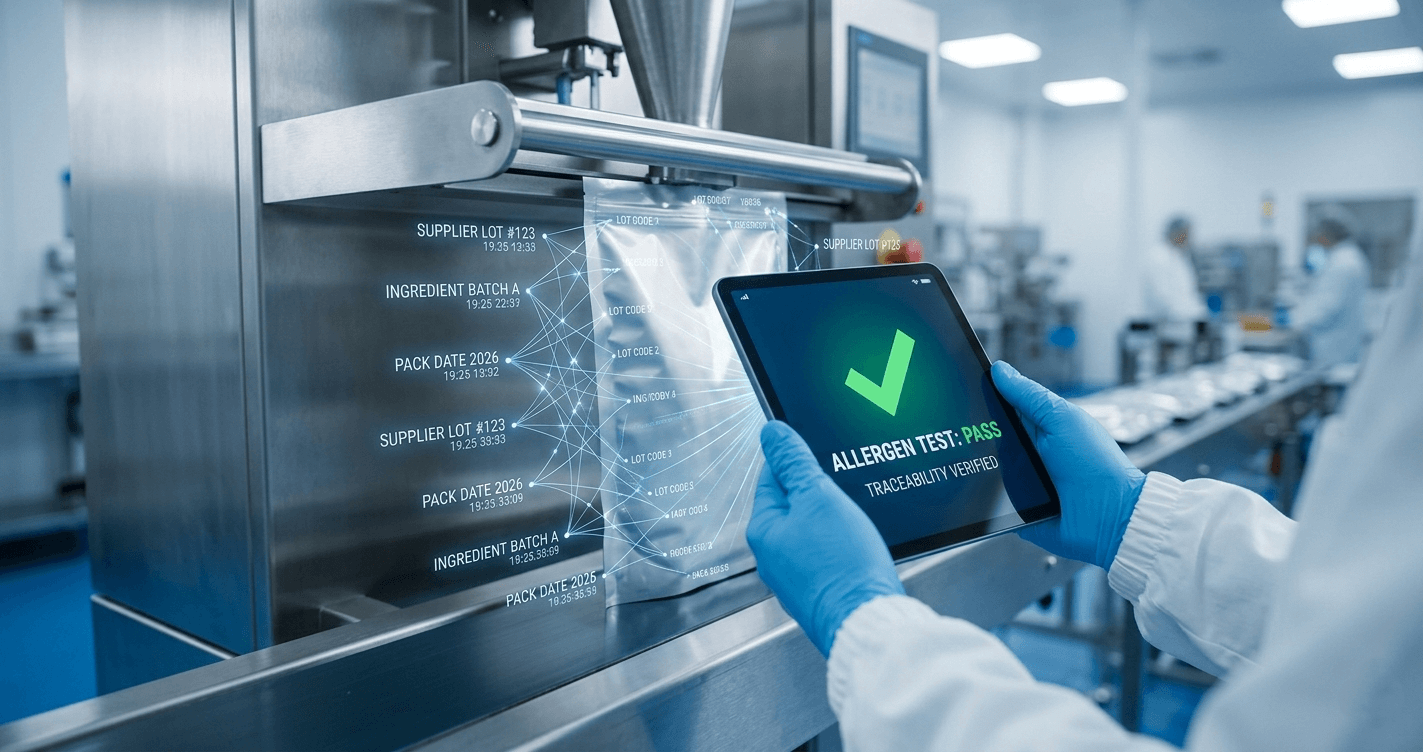
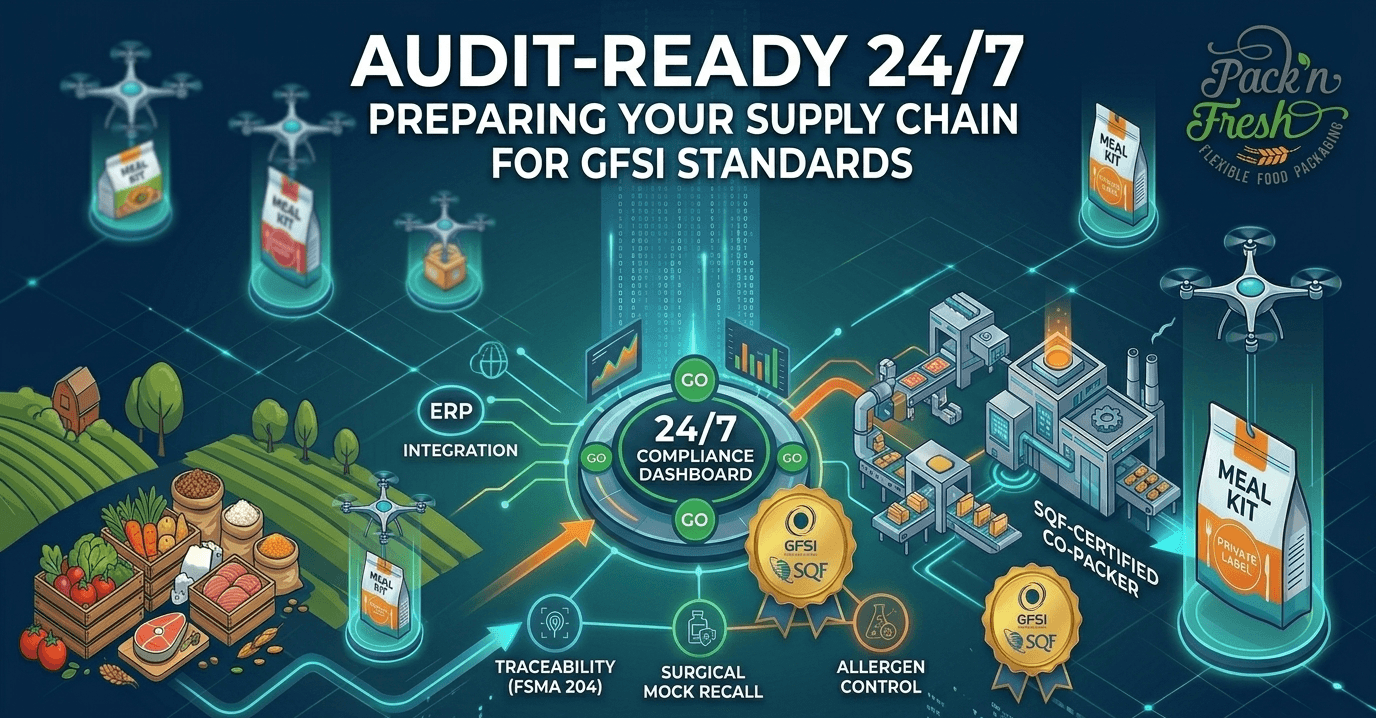
Food brands operate in a high-stakes environment where safety and recall readiness are essential. Under new 2026 regulatory standards and FDA FSMA 204 requirements, “paper logs” are no longer sufficient for an audit. An ERP-driven co-packer ensures:

  • End-to-End Traceability: Mapping the digital thread from raw material lot numbers to finished product batches.
  • Regulatory Compliance: Digital records that satisfy food packaging safety and regulatory standards (USDA, FDA, and GFSI).
  • Recall Readiness: Performing “surgical” recalls rather than brand-destroying mass withdrawals. This is the primary way to mitigate traceability risks.

2. Data-Driven Decision-Making

The advantage of working with a copacker with an ERP implemented is the granular level of data you receive. When your co-packer uses an ERP, you gain access to transparent reporting that directly impacts your food business COGS calculation, including:

  • Yield Metrics: See the precision of your small format pouching in real-time to eliminate waste.
  • Burn Rates: Know exactly when to reorder to maintain efficient packaging solutions.
  • Order Status: Track your product from the initial blending stage to final kitting.

3. Fewer Errors, Greater Accuracy

Manual processes lead to common food packaging mistakes that cost money and reputation. ERPs reduce human error by automating order processing, lot tracking, and compliance documentation. This is particularly vital for custom pouch packaging for supplements, where dosing accuracy is non-negotiable. ERPs reduce human error by automating order processing, which is why a copacker with an ERP implemented is the safest choice for high-stakes brands.

According to the FDA, FSMA Guidelines, digital systems are now the preferred method for maintaining high-risk food safety records.

Summary: Why Pack’n Fresh Invested in ERP

Ultimately, partnering with a copacker with an ERP implemented is an investment in your brand’s insurance policy. In the event of a regulatory inquiry, having the ability to pull a digital ‘surgical’ recall report in minutes rather than days can save millions in potential losses. This level of technical sophistication is what separates modern, data-driven brands from those still relying on legacy processes that cannot meet 2026 safety thresholds

At Pack’n Fresh, we don’t just pack—we optimize. We have implemented Power Central (Microsoft Dynamics 365), specifically configured for Food Manufacturing. By integrating this with our specialization in pouches under 2 lbs, we provide the technical sophistication usually reserved for much larger facilities.

Don’t let outdated systems limit your brand’s potential. Partner with a team that prioritizes data, safety, and 24/7 audit readiness.

Contact Pack’n Fresh today to see how our ERP-driven process safeguards your supply chain.

What is Food Co-Packing and How Can It Benefit Your Business?

Pack'n Fresh - Food Co-Packing

The Secret Ingredient Behind Fast-Growing Food Brands

In today’s fast-paced food industry, speed, consistency, and innovation can make or break a brand. Whether you’re a startup with a signature snack or an established name looking to expand, one strategic move can change the game: food co-packing.

Partnering with food co-packing companies is no longer just a convenience—it’s a smart, scalable solution that empowers brands to focus on growth, not just production. In this blog, we’ll break down exactly what food co-packing is and why so many businesses use it to scale sustainably.

What is Food Co-Packing?

Food co-packing, or contract packaging, is when a company outsources the production, packaging, or both to a specialized third-party partner—often referred to as a food co-packer. These partners handle everything from ingredient sourcing and batch production to labeling and shipping.

Simply put: A food co-packer turns your recipe or product concept into a retail-ready item—efficiently, professionally, and at scale.

What Do Food Co-Packing Companies Do?

The services offered by food co-packing companies vary, but typically include:

The technical infrastructure of food co-packing is what allows small brands to compete with global giants. By leveraging shared resources, a brand can access high-speed automated lines and specialized pouching equipment without the multi-million dollar capital investment. This democratization of manufacturing is the primary reason why the ‘barrier to entry’ in the food industry has dropped significantly over the last decade, allowing for more diverse and niche products to reach the retail shelf.


Top 6 Benefits of Food Co-Packing

  1. Scalability Without Overhead: Grow production without building a facility or buying machinery. This is the primary way to climb over the operational “Growth Wall.”
  2. Faster Time to Market: Established systems allow you to launch seasonal trends before your competitors.
  3. Expertise You Can Trust: Co-packers bring knowledge of safety standards and how to avoid common packaging mistakes. According to the FDA FSMA guidelines, professional manufacturing facilities are essential for maintaining the high-level traceability and safety records required for modern food commerce.”
  4. Cost-Effective Operations: Reinvest saved capital into R&D and marketing rather than heavy equipment.
  5. Custom Packaging Solutions: Access to specialized snack and spice pouching that elevates shelf appeal.
  6. Focus on Your Brand: Spend your time building relationships and innovating rather than managing production schedules.

When Should You Consider a Food Co-Packer?

If you find that demand is outpacing your current capacity or you are spending more time producing than marketing, it is time to look for a partner. It is vital to choose a co-packer with an ERP implemented to ensure your growth is backed by digital traceability and data.

Common Concerns: FAQ

  • Will I lose control? No. You maintain ownership of your recipe and brand; the co-packer simply handles the execution.
  • Is it only for large batches? Not at all. Many partners, including Pack’n Fresh, offer small-batch production for growing brands.
  • What about safety? Reputable co-packers follow strict GFSI and SQF guidelines to ensure 24/7 audit readiness.

Summary: Partner Smart, Grow Smarter

Ultimately, the transition to food co-packing is a move toward professionalization. When a third-party expert manages your production, you are effectively buying a ‘safety net’ for your brand’s reputation. With 2026’s stricter safety thresholds, having a partner who lives and breathes compliance ensures that your growth is not just fast, but also secure and sustainable for the long term

Food co-packing isn’t just about outsourcing—it’s about optimizing. By partnering with expert food packagers like Pack’n Fresh, you gain the flexibility to scale, innovate, and thrive in a competitive market. Whether you are launching a high-protein snack line or a national meal kit, the right partner is your secret ingredient for success.

Contact Pack’n Fresh today to learn how our expert food co-packing services can support your vision.

Taste the Craft Best Snack Packs for You

Pack'n Fresh - Best Snack Packs for a Hectic Schedule

Goodness Best Snack Packs for Every Mood

In today’s fast-paced world, finding the time for healthy meals can feel like an impossible task. We’re constantly on the go, running from meetings to errands, and somehow, our snacks need to keep up. That’s where snack packs come in handy. But not all snacks are created equal. Whether you’re following a gluten-free diet, need something low-calorie, or want snacks that your kids will love, there’s a perfect Best Snack Packs for everyone.

At Pack’n Fresh, we know how critical well-packaged, convenient snack solutions are for busy people. That’s why we offer customized food packaging solutions for businesses, from meal kit providers to food distributors. If you’re looking for reliable, high-quality snack pack packaging for your brand, we’ve got you covered.

Let’s break down the best Healthy Snack Packs, portable snacks, and even DIY snack packs that are easy to carry and suit different diets, along with how Pack’n Fresh can help your business meet these needs.

1. What Are Snack Packs?

Snack packs are pre-portioned, portable snacks designed for convenience. They are perfect for people who need quick energy boosts without sacrificing nutrition or taste. Think of them as little fuel packs that fit into your busy day. Whether you’re traveling, at work, or just need a quick bite between meetings, on-the-go snacks are a lifesaver.

For food businesses, providing these snack packs in well-sealed, custom packaging can significantly boost customer satisfaction. That’s where Pack’n Fresh steps in. We offer contract packaging services to help you create snack packs that are not only functional but also visually appealing to your customers.

2. Benefits of Portable Snack Packs

Portable snack packs have gained popularity because they are:

  • Convenient: You can toss them in your bag and go.
  • Pre-portioned: They prevent overeating, which is great for mindful eating.
  • Versatile: Options exist for every diet, from gluten-free to vegan and low-calorie snacks.
  • Nutritious: Many snack packs focus on whole foods and high-quality ingredients, giving you energy without the junk.

For businesses looking to create snack packs that cater to these growing trends, Pack’n Fresh provides complete packaging solutions. We help you with everything from sourcing ingredients to blending, packing, and kitting your snack products.

3. Healthy Snack Packs for Adults

If you’re trying to stick to a healthy diet but don’t have time for elaborate meal prep, healthy office snacks are a fantastic solution. These can include nuts, dried fruits, whole grain crackers, or protein bars. Look for snack packs that are low in added sugars and packed with fiber or protein to keep you full and focused.

At Pack’n Fresh, we specialize in creating packaging that keeps these snacks fresh and ready to go. Whether it’s individual portions of mixed nuts or protein-packed snacks, we ensure your product stays safe and appealing.

4. Kids Snack Packs on the Go

Kids need snacks that are not only tasty but also provide the nutrients they need to stay energized throughout the day. Kids snack packs should be easy to eat, mess-free, and healthy.

Some great kids snack pack ideas include:

  • Fruit slices with nut butter: Apples or bananas paired with peanut or almond butter.
  • Mini sandwiches: Whole grain bread with turkey or cheese.

Pack’n Fresh can help you create fun and kid-friendly packaging that’s perfect for school lunches or family trips.

5. Gluten-Free Snack Pack Options

For those with gluten sensitivities or celiac disease, finding tasty gluten-free snack packs can be a challenge. Luckily, there are now plenty of options available that don’t compromise on flavor or nutrition.

Some gluten-free options are:

  • Rice cakes with almond butter: A light yet satisfying snack.
  • Dried fruit and nut mixes: Packed with natural energy.
  • Veggie sticks with hummus: A crunchy, gluten-free snack that’s full of fiber.

We at Pack’n Fresh offer flexible packaging solutions that cater to gluten-free product lines, ensuring your packaging reflects the quality of your products while meeting customer expectations.

6. Vegan Snack Pack Ideas

Plant-based eaters also have a wide range of vegan snack packs to choose from. These snacks are free from any animal products but are still packed with nutrients.

Some great vegan snack pack ideas are:

  • Roasted chickpeas: A crunchy, protein-rich option.
  • Fruit leather: A natural and portable fruit snack.
  • Trail mix with dried fruit and seeds: A filling snack that’s easy to customize.

Pack’n Fresh can assist your business in creating sustainable, eco-friendly packaging for your vegan snacks, helping you appeal to environmentally-conscious consumers.

7. Low-Calorie Snack Packs

If you’re watching your calorie intake, you don’t have to sacrifice flavor or convenience. Low-calorie snack packs can help you stay on track without feeling deprived.

Examples of low-calorie snacks:

  • Air-popped popcorn: A whole grain snack that is low in calories but high in volume.
  • Carrot sticks with hummus: Crunchy and satisfying, but light on calories.

We understand the growing demand for low-calorie snacks, and Pack’n Fresh can help you develop the perfect stand-up pouch packaging to cater to this health-conscious market.

8. DIY Snack Packs for Customization

Sometimes, the best snack pack is the one you make yourself. DIY snack packs give you full control over the ingredients and portions, allowing you to tailor the snacks to your dietary needs and preferences.

Ideas for DIY snack packs:

  • Veggie sticks with homemade hummus.
  • Hard-boiled eggs with whole grain crackers.
  • Mixed nuts with dark chocolate chunks for a treat.

Pack’n Fresh can partner with you to create custom packaging that highlights your DIY snack packs and makes them stand out on store shelves.

9. Snack Pack Tips for Travel

Traveling can make healthy eating tricky, but snack packs can save the day. Look for snacks that are non-perishable and easy to eat on planes, trains, or road trips.

Travel-friendly snack ideas:

  • Jerky: A high-protein option that doesn’t need refrigeration.
  • Nut butter packets: Paired with rice cakes or fruit slices.
  • Energy bars: Choose options that are low in added sugars and packed with fiber.

At Pack’n Fresh, we can help you create durable and travel-friendly specialized pouch packaging that ensures your product arrives fresh, no matter the destination.

10. How to Choose the Best Snack Packs

Choosing the best snack packs depends on your specific needs. Are you looking for a snack that’s high in protein, low in sugar, or gluten-free?

Here’s how to pick:

  • Check ingredients: Look for whole foods and minimal processing.
  • Consider your schedule: If you won’t have access to refrigeration, pick non-perishable items.
  • Portion control: Go for pre-portioned snacks to avoid overeating.

If your business needs guidance in developing snack packs that cater to specific diets, Pack’n Fresh is here to help. We provide comprehensive packaging solutions that ensure your product looks great and stays fresh.

11. Snacks for Work or Office

When you’re at the office, having quick, easy snack packs can help keep your energy levels up throughout the day. Choose snacks that won’t spoil quickly and don’t need a lot of prep.

Work-friendly snack options:

  • Almonds and dried fruit: A healthy mix of protein and carbs.
  • Protein bars: Look for bars with minimal added sugar.
  • Rice cakes with avocado spread: A light, filling snack that’s packed with healthy fats.

For businesses looking to cater to professionals, Pack’n Fresh offers specialized on-the-go packaging that ensures your snacks stay fresh and convenient for workplace consumption.

12. Conclusion: Snack Smarter with Pack’n Fresh

In the hustle and bustle of daily life, having the right snack on hand can make all the difference. Whether you’re at work, traveling, or running errands, these portable snacks help you stay energized, focused, and satisfied. With so many options, from Low-Calorie Snack Packs to DIY snack packs, there’s a convenient, healthy choice for everyone, no matter your dietary preferences.

If you’re a business looking to package and deliver healthy snacks for work or on-the-go snacks, Pack’n Fresh is your trusted partner for high-quality, custom packaging solutions. Reach out to us today to learn more about how we can help you package your snacks with style and precision.

FAQs

  1. What are the healthiest snack packs?
    Healthy snack packs typically include whole foods like fruits, nuts, seeds, and minimally processed snacks. Options with high fiber, protein, and healthy fats are ideal.
  2. Can I make my own snack packs at home?
    Absolutely! DIY snack packs allow you to control the ingredients and portion sizes, making it easier to meet your nutritional goals and preferences.
  3. What’s a good gluten-free snack pack?
    Gluten-free snack packs might include rice cakes, dried fruit, nut mixes, or gluten-free crackers paired with hummus or cheese.

How can I partner with Pack’n Fresh for packaging solutions?

You can reach out to Pack’n Fresh for a consultation on your packaging needs. We specialize in custom food packaging for businesses, providing everything from ingredient sourcing to packaging design and vetting guides to meet your unique requirements.

Easy Holiday Meal Kits: Pre-Cooked Thanksgiving & Christmas Dinner Solutions

Holiday Meal Kits

Stress-Free Holiday Meal Kits: Pre-Cooked Thanksgiving & Christmas Dinner Kits

How meal Holiday Meal Kits companies can become their customers’ best friend for the holidays

While the holidays can be a merry time, full of celebration and moments that turn into memories, this Precooked Thanksgiving Dinner time of year can also be accompanied by a lot of stress.

Between navigating the crowded stores, getting the house clean and cozy, and prepping feasts for days on end — it can be a lot to handle!

This is where you can come in. You can be the assistant that every parent and host has ever hoped for. You could be the manifestation of Christmas Dinner Kits Santa Clause at meal time. 

It is an increasing trend today that specialization is an attractive concept to consumers. They want to feel, no matter how big or small the company is, that their needs are known and that the company cares about meeting those needs. 

During the holidays, people make wish lists. This wish list will inspire what others give them during this season. 

How does this affect you? Request a wish list from your consumers. 

Allow for your customers to tell you exactly what they need and want during the easy holiday cooking and when they need it, This will allow you to tailor your solution to meet their needs.

For example, if there is a week in which the in-laws are coming into town or the kids are home from college, allow them to change the quantity of plates in advance. 

This should be able to happen with ease, keeping with the theme of taking stress away from the customers’ lives. 

Pack’n Fresh can even help you perfect your serving sizes which helps families with how much food they need when the seats at the table increase

A key part of the holidays is remembering and remaking the meals you grew up eating as a child. 

While you may not be able to emulate grandma, allowing your consumers to pick the dishes that remind them of memories past, will be an easy way to make the holidays feel like the holidays. 

These wonderful recipes often call for ingredients that aren’t found in the pantry the rest of the year. This makes having a supplier with a large variety a necessity this time of year. 

This is beneficial for you too because you have the ability to increase your sales, at premium even, if you so choose. 

Additionally, your product will be consumed by more people, those who possibly don’t use your services. What is better than a family endorsement and getting to try the food for a prospective client? Nothing!

That’s marketing that can’t be bought. 

While Santa Clause only comes by one night a year, you are the little elves that make your consumers’ life easier year round. This holiday season, providing a little extra help will be a great way to build brand loyalty with your consumers.